Episode 1137:32November 19, 2026

Clay Lawrence on why reviews don't get done unless they're automated

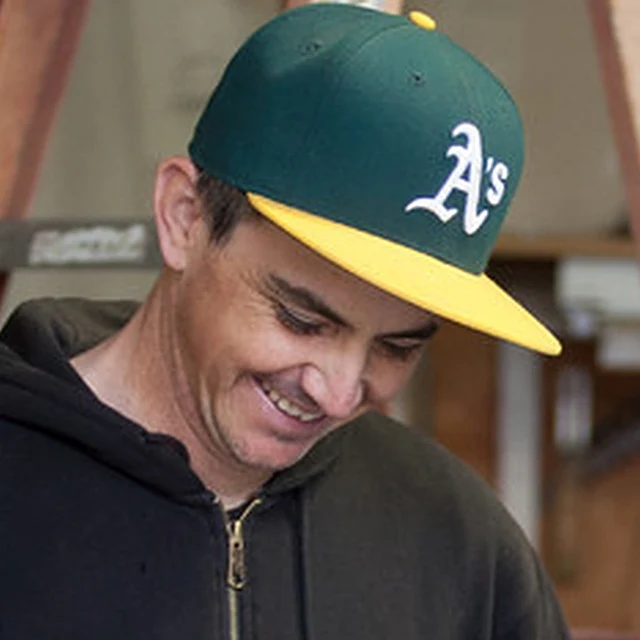
Clay Lawrence is the founder of Review Harvest, near Panama City Beach, Florida, which has helped over a thousand home service businesses get well over a hundred thousand reviews. He grew a marketing agency while at the University of Florida, turned the one thing his clients loved, review campaigns, into its own company, and has since added local SEO and websites. Clay explains when to ask for a review, why a contact form shouldn't feel like a book report, how Google treats names in reviews, and how a broken clicker at ScoopCon turned into a backflip.

Clay Lawrence

Founder, Review Harvest · Panama City Beach, Florida

The short version.

  1. 01

    Ask at peak excitement

    The right moment changes by trade. A plumber should ask right after the clog is cleared, while a lawn care company might wait until the homeowner has seen the finished yard.

  2. 02

    Automate the ask

    Owners give their crews the words, a QR code and even an incentive, and reviews still stall. Clay's rule is that if it isn't automated, it doesn't get done every time.

  3. 03

    Follow up, lightly

    Almost 40% of Review Harvest's reviews come from follow-ups that check whether the customer clicked the link or left the review, kept friendly so they aren't annoying.

  4. 04

    Make it easy to get in touch

    Put the offer you give on the phone on your website, and keep forms short for search traffic, which is already high intent. Filter harder only for traffic from places like Facebook.

  5. 05

    Anyone who interacted can review

    Google lets anyone who has interacted with your business leave a review, not only paying customers, so a new business can ask people it quoted or knows.

How Review Harvest asks for a review.

The system Clay described on the show.

Before

Asking for reviews whenever someone on the crew remembers to

Now

Every customer asked at the right moment, with follow-ups

  1. 1

    Pick the peak moment

    Request the review when the customer is most excited, which depends on the trade.

  2. 2

    Send a personal text and email

    The request carries a photo of the owner or the technician who was at the house, with the customer's name on it.

  3. 3

    Follow up

    Check whether they clicked the link or left the review, and send light-hearted follow-ups if not.

  4. 4

    Respond and reuse

    Reply to the reviews and repurpose them on social media and the website.

From beach chairs to an agency

Clay ran a beach chair company and a lawn care business in high school, then grew a marketing agency while at the University of Florida, buying local owners coffee to learn how their businesses worked. After college the agency had him doing everything for everyone, until his wife pointed out that what clients loved most was the review campaigns.

The review system

Review Harvest asks at the peak moment for each trade, by text and email with a personal image, and follows up when nobody clicks. Clay’s view is that scripts, QR codes and incentives help, but reviews only come in every time once the ask is automated. He also covers how Google handles names in reviews and the crackdowns that pull real reviews down.

Websites, forms and HeySegment

Reviews help an owner get found, but a bad website or Google Business Profile wastes that, so Review Harvest now does local SEO and websites too. Clay argues for putting the offer on the site and keeping forms short, and describes moving from HighLevel to his own platform, now being turned into HeySegment for other agencies.

Chapters and transcript.

The full conversation, lightly edited for reading. Bracketed text marks a cut or an edit. Pick a chapter or a timestamp to jump there.

00:07

David V. Kimball

Welcome to Retooled, a show where we talk to business leaders about how they've equipped their organizations to adapt to change over time. I'm your host, David, and I'm joined by my co-host, Dylan, and we're here to talk to Clay Lawrence. Lawrence. Clay is the founder of Review Harvest based in Panama City, Beach, Florida. And we're going to dive into how Clay got his start. How it's evolved with the rapid change in the marketplace since. And so please, Clay, please introduce yourself.

00:31

Clay Lawrence

Yeah, no, thanks for the introduction. Exactly what you said. We're right in between Panama City and Destin and the Florida Panhandle. We just got hammered by a category three hurricane that should have been a category one right after ScoopCon after we met there. And so yeah, so it's been a weird couple of weeks, but I think think communities come together we're we've rallied and uh yeah i really enjoy the area excited to hopefully um share some knowledge today if i can

00:59

David V. Kimball

wow what what happens after something like that what do you do uh

01:03

Clay Lawrence

well you lose power and you have to throw away all everything in your fridge unless you had a generator which we didn't um and uh no but but for the most part i mean it's just a lot of trees down we got lucky nothing fell in our house and so A lot of neighbors helping neighbors, trying to help each other out. Just walking around, driving around with trucks and chainsaws and trying to help out. I only got to do that for one day because I've been pretty busy with work. But yeah, a lot of neighbors helping neighbors and cleaning up.

01:33

David V. Kimball

That's nice. So tell me about Review Harvest and how you got started. Maybe any career background before that too would be good.

01:41

Clay Lawrence

Yeah, for sure. So I, in high school, I was always entrepreneurial. I was the kid in the back of the classroom figuring out how to make money online or do whatever I could. And so summers, I started a beach chair company, I had a lawn care company, like mowing yards for people in the neighborhood, you know, all the stuff. And then, you know, later on in high school, I was like, man, I wish I could, I want to make money online, like, that would be sick. That's the way to go, you know. And so I tried for years and years and years and did the marketing. Marketing agency stuff where I was just helping local businesses um you know here and there doing certain things whether it's run their ads or build a website for them and you know next thing I know I kind of looked up and I was in college and I was like way more focused on growing my own agency than I was school and so I like coasted like in high school I was like uh I was straight A student and like had to, you know, third in my class, had to do really good in school. But I got to college, got to University of Florida, realized I was like one of the dumbest people there because everybody there was super smart. And from there, I was like, I coasted through college, did the bare minimum. I think I did schoolwork like maybe one day a week, maybe one or two days a week. And I just worked on growing my marketing agency. And so it was a lot of YouTube, you know, YouTube, university, learning anything I could about running ads, creating websites, doing what, you know, ranking them on Google, doing whatever I could. And I would just message business owners like, hey, I'm a college student. Can I talk to you? Can I buy you coffee? Like, and the amount of business owners that were like, yeah, heck yeah, let's do it. And so I got to talk to to probably well over a hundred local business owners in Gainesville, Florida, where I was going to school and just kind of learn the game, you know? And I was from that, from that and from kind of my touch points back home and people I'd worked with back home, I was able to, you know, grow my agency to the point where after college, I didn't have to get a job or anything. I just kind of was able to go full in on the agency. And then fast forward about a year, the agency is growing, but I'm like classic doing any, you know, jack of all trades, master of none, doing anything and everything for anybody with a pulse and a credit card. And I was just like spending all day delivering my clients. And it got to the point where I was like, I can't sell another client or I know that my clients are going to, my current clients are going to sacrifice. They're going to, you know, kind of feel that and they're going to get less, you know, not as good results because I'm focused on something else. And so I was like not growing my business. I was just spending all day doing things as like a marketing intern for a bunch of businesses. And so from there, I talked to my wife. My wife's like, they all love the review thing that you do for them. We had a system where we're getting them a bunch of reviews through a review reactivation. So if they had 500 previous customers, we could typically get them anywhere from 50 to a hundred new reviews in the first couple of weeks by doing a text and email campaign with our kind of personalized image in our system. Take care. And she was like, they all love that. Why don't we just do that? And so that's what I kind of did. She was still working full time at Lululemon at the time, but I kind of rebranded into Review Harvest. And from there, it's been great. We've helped over a thousand home service businesses get well over 100,000 reviews. And just in the last six months or so, we've added on a local SEO and websites. Main reason being is because We can get you a bunch of reviews, but if you have an awful website or awful Google business profile or you don't have kind of the basics in place, like you're not going to really be able to capture the value of additional customers, leads and calls if you don't have these other two things in place. So now being able to control more of the variables when it comes to how they're showing up on search, we're able to provide a lot better outcomes and help them get a lot more leads.

05:18

David V. Kimball

That is awesome. Thank you for the background. Two things I want to highlight that you said. It is so true. If you go to people, business owners or somebody important, go, I'm a college student and I'm trying to learn. Dude, almost no one says no. I spent time at Northwest University, which is pretty near the Microsoft headquarters. So I would just find ways to like make every one of my projects about Microsoft and then ask to talk to some executive and interview him. And there's an excuse to like hang around on campus and like learn from all these brilliant people. And they always said yes. So I totally agree. Totally agree with that approach.

05:50

Clay Lawrence

I think it goes one layer deeper either where it's like, it's not even just college students. It's like whatever your angle is. Like if you are the single mom, lean into that. If you're the dad that's working 80 hours a week that wants to work from home and coaches kids soccer games, just like lean into whatever kind of angle you have that might resonate with somebody. Because just being another person isn't really going to differentiate yourself. Yeah.

06:17

David V. Kimball

Dylan, you're going to say something?

06:18

Dylan Baker

Yeah, well, I was going to get into, you know, like David and I have done, you know, a handful of podcasts already on the channel. And nearly everyone we talk to is like, they bring up how powerful their reviews are and like their review system. And none of them really talk about like the process of getting the review. So what is your process like with like going in and like auditing their current setup and like setting them up for like long term to where. Those reviews will compound rather than like one or two months and then, you know, they churn or whatever.

06:53

Clay Lawrence

Yeah, for sure. No, great question. So basically when it comes to these local businesses, typically local service based businesses that we're working with, a lot of times they have had, you know, a little push for reviews, right? Like, hey, we need to get some reviews. Let me just. Everybody asks customers to leave reviews, right? But what happens is very rarely does somebody actually have a system in place that's going to happen every single time for every single customer and across multiple touch points. And so what I mean by that is when we want to request the review is at the peak excitement moment for that customer. And so that changes per business. If you're a plumber, it's when you unclog the toilet and you get the poop out of their bathroom or whatever it is. That's the best time to request a review, right? If you are, let's say, a landscaping company, company or a lawn care company and you know the yard, you might not want to request a review right away because maybe they weren't home and they didn't see the fact that their yard is done yet. And so it kind of changes for each industry, so you want to kind of keep an eye on that. But you want to request that review, peak excitement every single time, and you also want to have multiple touch points. And so, We recommend our system, obviously. It sends out a personalized image of the business owner, of the technician that was at their house. Even we're working on some stuff where it's going to start sending over photos of their own job when they're requesting a review. So it's very personalized and we auto-populate the customer's name on that image to get their attention. And then we're sending that via text and email to request a review and get them to go leave a five-star review. From there... Really, almost 40% of our reviews come from follow-up, so we're checking to see have they clicked the link, have they left a review, have they responded to it, and then we're following it up with very kind, light-hearted follow-ups, not to be annoying, and people can adjust that as much as they do, but as much as they want to, but when it comes to kind of our strategic advantage now is that we've sent out millions of review requests, so the amount of data that we have on You know, best time of day, best cadence between follow ups, best messaging, but here's the best verbiage. All that stuff is insane. And so like we know the best times of day to send a follow up message. We know the best time today to send the first review request message. And so that's definitely just our Review Harvest system, texting emails, doing that. And from there, we're responding to the reviews for them. We're helping them repurpose those onto social media and onto their website. And at the end of the day, these reviews get you seen on Google and they get you selected, right? More views means you rank higher on Google. And if you are showing up there and you've got more views than your competitor, you're going to get the phone call instead of them. And so that's kind of like the basics of it. But I will also say the people that really crush it, they use us and they have some sort of other personal face-to-face interaction that happens as well. So you'll have people that respond really well to the face-to-face stuff and then you'll have people that won't respond at all, right? And so those people need to text and email and those people need the face-to-face. And also there's a lot of services where you don't get the face-to-face opportunity because you are a lawn care company where you're mowing the yard when nobody's home, right? And stuff like that. So you need something in place to capture those reviews.

10:01

David V. Kimball

Right. That's super helpful. The other thought I had is that you're talking about, you're kind of like, you're jack of all trades, then you focus on reviews, because that's what people really love you for. And then they heard you say, oh, we're also doing local SEO a little bit more broadly. And we're also doing websites. What's really interesting about focusing on reviews is the part you're not saying is like, Google reviews or Yelp reviews, you're on a platform. And so if that platform ever disappears, you've lost all your reviews. And that's the scary part is these platforms can kind of just terminate you without warning. So I'm interested, because one thing we think a lot about is ownership at lilAgents. We think about ownership, portability, durability, these principles of, you know, in 10 years, what platforms are still going to be relevant or still be out there, you need to be thinking long term. And I think a website play is really important to that, because that's a piece of owned land. So how do you decide that? Kind of branching out a bit more from just reviews, was it the right thing to do for your org?

10:58

Clay Lawrence

Yeah, I know a couple of things. Well, I think our kind of mission of what we help customers do and achieve has changed. Like, at first it was like, hey, we want to get you basically more reviews, right? And then as we realized, like, a lot of business owners don't typically understand, like, reviews definitely means revenue. And so, like, we need to kind of change the promise that we're making these business owners. And it's like, hey, we're going to help you get. You know, found on Google, right? We're going to help you get, you know, more, get seen more often on Google. That's what reviews are. So we kind of changed that promise. But like I said, when we change that promise, if their website's awful or the Google business profile is not good and the basics of local SEO aren't there, we can't really fulfill all that, right? And so now our, you know, premise and our mission statement is, hey, we hope you get more customers from search. Search broadly, you know, AI, you know, perplexity, Claude, whatever it is, Google, Gemini, Gemini AI, the AI overview, the traditional local SEO, Google Maps, the map pack, whatever it is, we hope you get more customers on search. And so that's kind of like our premise now of like, now that we're doing the website, now that we're doing the Google business profile, we can kind of own more of the variables. You all know just as much as anybody else, a lot of these local service-based businesses, their websites are at best sometimes a pretty billboard, but they're not actual websites that are getting people to take action, getting in touch with their leads. They might have landed on a business website that I'm about to talk to or whatever, and I, as somebody that's been on thousands of local service websites. I don't even know where to go get in touch with them. Like the click to call button doesn't work. I'm having to like manually type in three digits at a time to like, you know, call their phone number or their quote button is at the very bottom of their contact us page. And it's like, what, what are we doing here? And so turning those websites into not just, you know, maybe pretty billboards, but interactive processes that are meant to take cold visitors. visitors into leads in your system and how in turning those into customers obviously so um so yeah i think that answers your question

13:06

David V. Kimball

yes

13:06

Dylan Baker

it's all about making it as easy as possible pretty much it's like when like we're like reaching out to businesses and stuff i i always had to remind myself like hey like be as non-technical as possible when you talk to these people like not like Dumb it down, but just make things really simple and understand. I think that correlates into how you build a website and a click funnel and a contact form, for example. But yeah, man, I mean, it sounds awesome. You're, you're located in Florida now, right? Yep. You're in Destin, right? Yeah. Did you, and you grew up there, right? Yeah. Yeah. Nice. Nice. And then you met, you met our team at a convention in Dallas recently. What were you there doing at the convention? Were you talking to small businesses or what?

13:50

Clay Lawrence

Yeah, for sure. It was a pet waste removal conference. So poop scooping companies. We were there and I spoke on Sunday or Saturday, I believe about. Kind of what we're doing, how you can help these type of businesses rank higher on Google and get more customers. Like you said, the website, you want to throw it in their face, make it really easy for people to get in touch with them. But there's also a bunch of like obvious things that business owners just don't think about. The amount of times I talk to a business owner and I say... What, do you have an offer? Like, do you have, and they're like, yeah, yeah, we give this away. We give 50% off or we give a hundred dollars off an estimate or we give X, Y, Z. Like if you're talking to somebody, what might you offer them to get them engaged? I'm like, all right, so you just give this to anybody, right? And they're like, yeah. I was like, well, why the heck is it not on your, your website? You've got hundreds of people landing on your site every single week, every single month, however high volume they are, and we're not giving them this offer that you're only giving people over the phone. So, you know, And I could go on and on. Also the fact that a lot of these business owners, and that's something I talked about at the conference, a lot of these business owners, getting in touch with them is like writing a book report. I mean, holy crap, you've got to fill out 27 forms and give over your Social Security and your firstborn child and all this stuff just to get in touch with the business. I'm joking, obviously, but some of these contact forms are like 18 questions, and I'm like, if you want to get more leads... Then, I mean, I'm sure you're getting, and that's another thing, you start getting them more leads and like, oh, these leads are high quality. It's like, yeah, because everybody else, the one lead you were getting a month, sat down and typed up an essay to get in touch with you. Of course, it's a pretty high quality lead. You made them jump through a thousand hoops, right? But I would much rather for businesses that are struggling, don't have the phones ringing, can't get customers, I would much rather give you 20 leads that you can call and talk to and create a relationship with than you just get one super high quality lead all month,

15:39

Dylan Baker

Mm hmm. Definitely. Yeah, I think especially with home services, it's all about volume. Like I don't I don't know the exact data when it when it comes to like the close percentage with like inbound leads. But we chatted with someone recently about it and they actually find it more or higher converting from like outbound leads and like telemarketing leads and stuff. So I don't know if you like work with any businesses that do that or if you have any comments on that. But From my perspective, inbound leads would be the easiest ones to provide information and close.

16:12

Clay Lawrence

For sure. I think that it depends on where you're sending the traffic from. If you're sending traffic from Facebook, then sure, it might be a good idea to filter and maybe have a few extra questions. You don't want tire kickers filling out the leads who don't care and aren't going to fit at all and they're just like, oh, I didn't mean to do that. And then Facebook's data and their pixel starts optimizing for those tire kickers, right? Because you're sending that lead event back to them, right? So you don't want that. But most of the time, people are just using Facebook lead forms if their home service business is just easy or they have a specific page on their site for Facebook leads. But when it comes to Google, If you are getting this traffic organically through search with AI, whatever, and they land on your homepage, they're already super high intent. They just typed in pool cleaning company near me or pet waste removal company near me or landscaping near me. They just typed that in and clicked on your site. They're super high intent. So, you know, adding seven, eight extra questions to your forum because you want to get all the information up front. It's just adding more friction to somebody that's already pretty high intent. So might as well get the lead, because if they're all coming from search, they're going to be a lot higher.

17:23

David V. Kimball

You mentioned like there's ideal moments to reach out for reviews for like a business that's listening to this episode and goes either I have decent reviews or I don't. I need more. What's some advice you would give to them on some really clear moments, like, let's just use the general contracting or, you know, construction or similar industry as a as a maybe an example, if you don't mind.

17:46

Clay Lawrence

Yeah, for sure. Well, I mean, I think let's say you're renovating a bathroom, right? You dig you go through you probably have, you know, making progress, the homeowners around they're looking at like, okay, yeah, it's looking good or whatever. They give you a punch list. And then you go and you finish the punch list. And they're right there. And they're like, Hey, here's the new bathroom. And you're like, all right. Ask a review or ask a review right when you leave or do it like right away because there's like there's no I tell people like are you more excited about a brand new car the day that you get it or a month later, right? And most of these business owners like ask for the review a month later, not the day they got the brand new car. And so that's just a very basic example. But I think like super beginner advice for anybody getting started if you don't have a lot of customers. Google says anyone who's interacted with your business can leave you a review, not transacted, but interacted. So have you taken somebody to a quote process? Maybe they didn't choose you, so you can still request a review. If you've got people in your phone contacts, their personal friends and family, as a small business owner, as a service-based business owner, you probably are the face of your business. They've interacted with you, they've interacted with your business. Ask them to leave you a review based off the content of your character. And then if you do have a big customer list of 100, 200, 1,000 previous customers, then this is super easy. You just need to set up a system to text and email those customers so that you at least ask. It doesn't even have to be something crazy. You can do it manually. Do 15, 20 a day. You don't want to reach out to all of them in one day because you might get a massive spike in reviews and Google might send those down because it looks unnatural. But, um, but yeah, honestly, it's so simple. It's like, just ask if you're asking via text and email and in person, you will get a bunch of reviews. Um, email is going to be at your lowest converting channel. Text is going to be super high converting, uh, face to face will be very high converting, but it's hard to get employees and people that don't understand the value reviews to do it. You can incentivize them, but you're not really supposed to do that. That's what Google says nowadays. But we always say, if it's not automated, it doesn't get done. And a business owner is like, yeah, that's true. Yeah, I'm trying to train my team on how to get reviews. Great. Have you given them the words to say? Yeah, I told them what to say. Have you given them a QR code or a tap card or something to do it? Yeah, I've given that. Have you somewhat incentivized them, even though you're not supposed to? But have you somewhat incentivized them? Like, yeah. All right, so why is it not happening? Why aren't reviews coming in there? I go, I don't know. I was like, because it's not automated. It's not going to get done every time at least, right? And so obviously if they incentivize really well, like I said, most of our businesses that have the most amount of reviews are doing all three. We're doing, they're using Review Harvest for text and email to catch anybody they couldn't get face-to-face.

20:28

David V. Kimball

So about six months ago, I saw some guidelines from Google that you're not supposed to include individuals names in reviews. views. Thanks for tuning in. So a couple of things. That's insane. First of all. Secondly, how do you think that will impact? Because there's a there's a whole library of reviews, I would argue, like, I don't you wouldn't have the numbers on this better than me. But like, it seems like a good percentage of reviews have folks named in them. So are those reviews going to become deprioritized? Are future reviews that have names going to be punished more? Like, how do you see that actually playing out?

21:02

Clay Lawrence

Yeah, I mean, I think in general, anytime Google says something, there's like what Google says and what Google does. And we have not seen what you'll see with like reviews getting taken down is that reviews have always for the last couple years, just sporadically reviews will go missing, right? And they'll can be a real review from a customer. And that's because they really try to crack down on fake reviews. Like Google is using things like this reviewer's previous review history, their IP address, where are all the reviews they're leaving and a bunch of other nerdy stuff I'm sure to figure out whether these reviews are fake or not. And unfortunately the algorithm doesn't get it right all the time. And so a lot of times they're removing real reviews. When it comes to Google saying don't do this, from what I can tell, they aren't really hurting businesses that already have a bunch of reviews with names in them. Whether the reviews with names in them are more likely to get taken down, I haven't really seen that. We have a clear chart of reviews taken down at Review Harvest. How it works is typically like this. Pretty much no reviews are getting removed. All of a sudden, one month, Google says, hey, we're going to crack down. Boom. And we'll get like a thousand reviews removed from a bunch of different clients. All real reviews. And we have to go through the process of appealing and getting them back for them. And then it'll kind of be hell, honestly, for a couple of weeks. And it'll be like no reviews removed. And boom, it happens again. And so they go through these kind of like crackdown periods where they just like freak out. But no, I don't think that Google is really going to enforce. I think there's some sort of natural language that. A percentage of the time, somebody leaving a review is going to talk about who served them. And so I think Google is smart enough to know that. And there's really not much they can do to enforce that. I think that was basically just Google saying, quit paying your people based on the number of reviews they're getting. They don't want them to incentivize or whatever. Because, I mean, it was a very, very great strategy. I mean, people that just use Review Harvest, their guys don't ask, their employees don't ask, whatever. People that just use Review Harvest would get 30, 40, 50% review conversion rates and we still have a bunch that get 30, 40% conversion rates. But some of our highest ones that we're getting, 50, 60% of the customers leave a review. The message would say, hey, if Randy or whatever serves you well, please leave a review with his name in it and we'll give Randy a $10 tip on your behalf. So now you're telling the consumer, hey, I can tip the guy that came and helped me by taking 20 seconds to leave a review. And I don't even have to pay for the tip, right? And so it's a very persuasive offer. I think Google is just trying to kind of get cracked out on that.

23:39

Dylan Baker

Yeah, I hate when I go to restaurants and they offer something free to leave a five-star review because I'm always baited. I'm always baited into doing it. And then the couple of times that I have done it. it, the food wasn't good. It's like, man, I just, like, totally lied and gave a great review to this business You can edit your review afterwards. Yeah, yeah. I mean, I guess you could, but then I would feel even worse about it. That's it. You know?

24:09

Clay Lawrence

Oh, man. Yeah, I mean, it's a balancing act. I mean, I think that the integrity of the platform, like we said, platforms come and go. I think that Google's positioned pretty well for the future, even with AI search and stuff. But . Platforms come and go and I think that although the pains of reviews going down because they're removing real reviews because they're trying to get rid of the fake ones and the bad actors out there. Although that stuff sucks and the roadblocks suck, I do think that overall it'll be a net positive just to keep the integrity of the platform high because if it becomes inundated with spam, then yeah, then it's like no one's going to listen to it.

24:45

David V. Kimball

Totally, yeah. You're seeing that as well in other domains like Amazon reviews and stuff. They're doing the same kind of things. So I'm interested is one question we like to ask our guests is, is there a is there a vendor or a third party provider you've worked with recently who you want to give a shout out to a name drop from something you've worked on recently?

25:03

Clay Lawrence

Oh, that's a good question. I don't know, honestly. I think that, uh, I don't know, Claude. That's been my,

25:17

David V. Kimball

Anthropic?

25:18

Clay Lawrence

Yeah, yeah.

25:19

Dylan Baker

Your wife?

25:20

Clay Lawrence

Yeah, my wife.

25:21

Dylan Baker

A lot of people say the wife.

25:23

Clay Lawrence

My wife, for sure, for sure. I was thinking vendors, so I was thinking who to shout out. um... I Sometimes I feel like I'm the problem because of how poorly I select vendors at certain times when I'm doing other stuff outside of my business. I think I probably am the problem. But, no, yeah, definitely my wife. Shout out to my wife. She, she. We, after the pet waste removal event and ScoopCon in Dallas, we had an incredibly busy couple of weeks and she's been working like a dog, no pun intended. So, yeah, shout out to her.

25:57

David V. Kimball

That's awesome. It was very good to meet her and you at the conference. And also. Also, um... Do you, every time you speak, do you do a backflip for everybody?

26:08

Clay Lawrence

Um, not everybody, but it happens. It kind of became a thing. I mean, the story goes, I told a part of it, but the story goes is that like, I went to the first of poop scooping event, ScoopCon two years ago, I was out there and I thought I was stupid. My clicker wasn't working. And the guy was like, Oh, just press the green button. He came and changed out the clickers and the green button worked on the next one. But I was told this year, actually, actually. That my clicker wasn't working. So it wasn't stupid. It wasn't my fault for not touching the right button, the big green button to go to the next slide. It was actually a faulty clicker. But in the meantime, while I was like having this awkward interaction with the AV guy, there's 100 people in the crowd just like waiting. I was like, what am I going to do to entertain the people? And so I was like, I guess I'll just have to rip out a backflip. And then it became a thing because now everybody saw it. So now you got to do it again this year. They got backflip insurance this year, apparently. That's what they said.

27:03

David V. Kimball

No way. Are you serious?

27:06

Clay Lawrence

I don't think they did. That was just a joke. That would be incredible.

27:10

David V. Kimball

That's incredible. So then, I have to ask, did you do gymnastics and stuff when you were younger? How did you learn to do that?

27:18

Clay Lawrence

So I played soccer and football growing up. And I got hurt too many times playing football, like head and neck injuries. And so I wasn't allowed to play football anymore. And I was like in fourth or fifth grade, I think. And my sisters both did gymnastics and they had my mom, my dad traveled Monday through Thursday, pretty much my whole life growing up until I was like 13 or 14. And so my mom was like, hey, we're going to drive the girls to gymnastics and like, we're it's so far away that we're going to stay out there while they're there. So you can either sit in the car. car or you know sit there and do nothing or you can if you want to do it then i was then you can do it so i was like heck yeah i'll do gymnastics so learn how to do back handspring learn how to do backflips the only thing that stuck i i had i had a lot more i can do a round off round off backflip cartwheel and stuff like that but i can't do a back handspring anymore out there yeah but

28:11

David V. Kimball

But yeah, I think I did one back handspring when I was when there was someone there and there was a cheese mat. It was like perfectly conditioned to be easy. I think I did that a couple of times. And then I can do backflips and front flips on a trampoline. But you did it straight up on the stage. It was awesome. So I'm sure you're like tired of that. You're like, hey, I don't want that to be like the impact I leave. I want to like have my business value be the first thing. But I was curious. I had to ask about it.

28:33

Clay Lawrence

Hey, I'll take it however I can get it. I don't care. I told somebody that a backflip is a high R.I. activity because i truly do think it is a uh it's a way to differentiate yourself for sure but also i used to growing up i used to do flips for a kiss so i'd go out to like our public little spot where you have tourists all the time and i'd go do flips to get a kiss from a girl so if i do a backflip i get a kiss so there's a lot of good there's a lot of ways you can uh you can you know use this skill but i would say uh it is definitely more mental than it's physical i've seen i've seen like 250 pound men who like don't look very athletic but aren't afraid of anything do a standing backflip my dad is 50 he can almost 54 he can almost do a standing backflip so it is so much more like getting over the mental side of like i'm gonna do it than it actually is like you're in

29:19

David V. Kimball

Yeah, that is so cool. The other question that we like to ask is, there's a couple things. It makes you different from the other guests that we've had in terms of like the technology that you've been using internally. You'll probably get more technical, which is honestly up our alley. I'd love to ask you, you know, since you've started Review Harvest and even like the agency you had before was formally called that, before that, what changes in technology have you noticed internally that you've been using and that specifically you, your wife and whoever else is on your team have been using that you've had to like assimilate to everyone else.

29:53

Clay Lawrence

Yeah, no, for sure. I mean, I think this is probably operates some of the most brain space, some of the most like mental capacity of like what tools are using what we're doing all the time, because it's been a kind of sticking point for me. So started off, I found HighLevel in college. GoHighLevel. That was great. White labeled it. Got hundreds of clients on HighLevel with Review Harvest. And then the whole A2P thing happened. And we were trying to onboard 20, 30 people a week at certain times. What's A2P? What is that? It is a phone number verification. So instead of having, instead of just purchasing a phone in HighLevel and being able to send texts and emails from it, now you have to go through like a $30 process and like a 48-hour or 72-hour process of getting all these privacy policy and all this just like red tape to get a phone number approved, even send messages. And high-level basically has a constraint where you have to get ATP approved per sub-account. Every single new sub-account has to have its own ATP brand approval. And so then I was connected with the developer, and basically we built out our own Review Harvest platform. So custom code, built it out. That's what we still use to this day. And it is basically, you know, we connect directly to Twilio. So we kind of get around that constraint of having to get A2P approved for every single new client. And we kind of operate on like pass through consent there. But that's a little bit too technical then for this, I would say it's like legal jargon. But all that being said, that has been kind of the evolution of it. But now we are moving to me and my developer that built Review Harvest. I have like on the side built an audience of... marketing agencies on my YouTube I got like a small YouTube channel 16, 17,000 subscribers or actually I think 18,500 now I'm not sure but um so I have a kind of an audience of marketing agency owners and so we have built out kind of Review Harvest, what our custom software we built we built that out to be white label for marketing agencies so it right now it does reviews and we're also adding on websites as well and so we're gonna add our websites and we're also gonna add on Google Business Profile management. We're adding kind of all those three so we can kind of manage the whole process. And the cool thing about what we're building with HeySegment, which is what it's called, is that it is it can all be run through your Claude or through your codex or whatever. And so you just say, hey, onboard this customer, they just literally Connected to their Google business profile and from that we're able to go start building out a website and doing everything. It's like, hey, send the onboarding link, click the information, from there build the site. Hey, we've got hundreds or thousands of sites, whatever it is. Hey, here's our fall offer for anybody that is a plumber and we have 60 plumbing websites, whatever it is. They all have this fall offer on their homepage, boom, and it just updates all the sites just directly from your Claude or Codex or whatever. And so it's... I guess they call that headless. I'm not super technical, but you're not going in poking around in a UI. You're using, you know, Claude or your agent to kind of manage the whole process.

33:01

David V. Kimball

That is awesome. And also you're at 18.6 thousand subscribers. So almost 19K at this point. So well done. Sweet, sweet, love it. So yeah, that's, that's really awesome. So HeySegment is going to be, is that, I'm trying to understand, is HeySegment part of Review Harvest? Is it a parallel service? Is it, how would you describe the relationship?

33:24

Clay Lawrence

HeySegment's going to be marketed towards marketers. So it'll be, we'll be selling it to other agencies. They can white label it, put their own logo on it and just kind of use the same tooling that I'm using to run our business, Review Harvest. So it's a little bit out of kind of the scope of like. If you're a home service business and are listening to this, you probably won't use HeySegment. It might be a little bit too technical for you, but maybe one day you'll use another agency or another review software or something that uses HeySegment.

33:51

David V. Kimball

Yeah, that's really cool. Well, I know we're almost at time. Dylan, do you have any other questions for Clay while he's here?

33:58

Dylan Baker

Yeah, Clay, if you weren't running Review Harvest in the side projects, what do you think you'd be doing for a career or for fun?

34:05

Clay Lawrence

Uh, probably Instagram influencer doing like cliff jumping stuff.

34:09

Dylan Baker

Nice.

34:11

Clay Lawrence

No, I don't, I honestly don't know. I, it's a good question. I think that I played tennis and I played sports. I got hurt. Couldn't play contact sports, played tennis, like invested all of my, all of my time from. From basically freshman year of high school to like senior year, COVID years when I graduated. And so they canceled our senior tennis season. And I basically invested like all my free time into getting better at tennis. I went from somebody that never played tennis before and like eighth, ninth grade to second on our varsity team. And the first guy went and played in college. And so like I'd like I tried to get really good at tennis really quickly. And I was like just all about it. And then they canceled our senior season before we were going to go to state because of COVID. So that sucked. And I just needed somewhere else to like, I had this insanely addictive personality, always have. And so I just needed somewhere else to point this kind of addictive personality and business was that. And so from there, I've just been kind of obsessed with trying to have my own business and grow it and do all the things that required. So I can't imagine what it would be like, but I know that in the past. I used to make YouTube videos and Instagram videos about trick shots and cliff jumping and all that stuff. So I would be maybe like a wannabe Dude Perfect or like a wannabe Travis Pastrana or something like that.

35:33

Dylan Baker

Nitro Circus.

35:34

David V. Kimball

I love it. That is awesome.

35:36

Dylan Baker

Nitro Circus. That stuff's nuts. David, I'm all good, man, on my end.

35:43

David V. Kimball

Great, Clay. How can people get in touch with you? How can people do business with you? Where can they find you?

35:47

Clay Lawrence

Yeah, for sure. If you're a local home service business, go check out reviewharvest.com. You can check out our packages there where we do reviews, websites, Google Business Profile and local SEO stuff, or we can do all of those together. And we think we do it for, honestly, a fair, very reasonable price to kind of think about it as like we want to be. We don't make a lot of money at all unless you're a client of ours for years and years. So our incentives are aligned for us to get you results over time because it is a slower service. So it's like we can do things that just turn the faucet on that makes your phone ring constantly right away. And so because of that, we price it appropriately so that over time you can become the type of business that ranks the top of Google consistently and gets calls and leads and all that stuff without having to spend thousands of dollars on ads. So yeah, you can check us out there. And then just Clay from ReviewHarvest.com. I have a podcast similar to this where I interview service-based business owners. We learn all about what works of them growing their own business, talk about marketing strategies, talk about kind of their story and specifics of their industry. So yeah, find me there at just Clay from Review Harvest.

36:55

David V. Kimball

Thanks, Clay. Yeah. And I have to say one of our One of our customers, one of our clients uses Review Harvest and loves it, has been using it for over a year. So I can say firsthand experience that it's a product that I can stand behind because our customers love it, too. So, yeah, thanks so much for your time. It was a super, super great episode. And so I'll catch you on the next one.

37:15

Clay Lawrence

Awesome. Thanks, guys. Thank you.

What came up.

The tools Clay mentioned on the show. We don't take money from any of them.

Review HarvestTheir own platform for review requests by text and email, custom built
TwilioWhat the platform sends texts through, instead of a phone number per client
Claude and CodexHow HeySegment's sites and clients are run without clicking around the UI
HighLevelMoved offWhere he started, white-labeled, before A2P approval per sub-account got in the way
GET STARTED

Find out what you could stop doing.

We find the processes that slow your team down and fix them, so you can spend your time on meaningful work that moves the business forward.

Smiling woman holding a smartphone at the center with orbiting logos of programming languages and platforms including Swift, Ok.ru, and others.