Episode 135:03October 8, 2026

How Cody Weight made 100 homes feel like 20

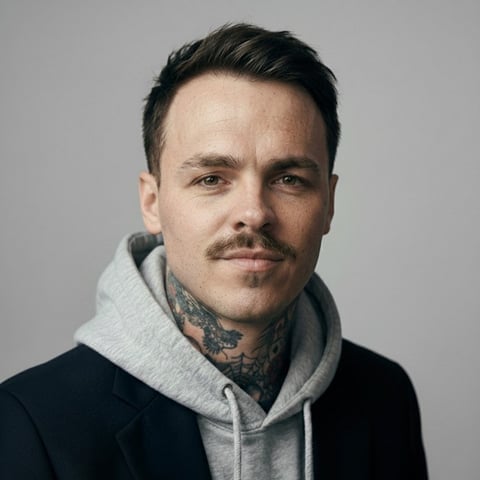
Cody Weight has built custom homes in Boise since 2007. Over the last five years, Solitude moved every text, email, spec and approval into one construction management platform. Its subs now see their tasks on their phones, clients sign from anywhere, and the company grew without adding people.

Cody Weight

Founder and owner, Solitude Homes · Boise, Idaho

The short version.

  1. 01

    One record ends the arguments

    Every text and email runs through one platform, so anyone can see what was said and agreed. Cody's contracts got longer for the same reason: for recollection, not because anyone is dishonest.

  2. 02

    The hard part was buy-in

    Getting subs who'd spent 20 or 30 years in the trades onto an app took time. Now they open it on site, see their task and what's approved, and do it.

  3. 03

    Growth without more people

    Approvals that used to need a trip to the office happen in a day with electronic signatures, from anywhere. That's how the company grew without adding bodies.

  4. 04

    AI for takeoffs, not crews

    Cody expects framers to run plans through AI for a takeoff and a price, but doesn't expect it to replace anybody in construction.

One platform for the whole build.

How Solitude Homes runs a build today, as Cody described it on the show.

Before

Spreadsheets and Word documents in different places

Now

One construction management platform the whole team works from

  1. 1

    Every message lands in one place

    Texts and emails with clients and trades are funneled into the platform, so anyone can see what was said and agreed.

  2. 2

    Every spec lives with the job

    Plumbing, lighting, flooring, countertops, appliances, framing specs and engineering sit in the same system.

  3. 3

    Subs work from their phones

    Trades open the app on site, see their task and what's been approved, and get it done.

  4. 4

    Clients approve from anywhere

    Agreements and approvals happen in a day with electronic signatures, without anyone driving to the office.

Why the contracts got longer

When Cody started Solitude Homes in 2007, a contract was one or two pages. Today it’s much longer, and Cody is clear about why: not because anyone got less honest, but because a build has hundreds of decisions in it and people forget what they agreed to. In Cody’s words, you need contracts “for recollection.” Everything that came after, the software included, follows from that idea: write it down, put it in one place, and nobody has to argue about it later.

One platform, and the slow part

Over the last five years Solitude moved off spreadsheets and Word documents scattered across folders and onto a construction management platform. Every text and email with a client or a trade now runs through it, and every spec, from plumbing to framing to engineering, lives with the job. The result Cody describes is the line that gives this episode its title: what felt like managing 100 homes now feels like managing 20.

Cody is honest that the software was the easy part. Building it out took a lot of work, and getting subcontractors who’d been in the trades for decades to use an app took longer. What won them over was simple: open the app on site, see your task, see what’s approved, do it.

Where AI fits on a job site

Cody’s view of AI is practical. Renderings that used to take two weeks now take about a minute, and framers will soon run plans through AI for a takeoff and a price. What Cody doesn’t expect is for it to replace anybody in construction. The people still matter most, which is why the episode also covers Solitude’s trades, how Cody kept them loyal through the Great Recession, and an afternoon spent hanging a past client’s porch swing.

Chapters and transcript.

The full conversation, lightly edited for reading. Bracketed text marks a cut or an edit. Pick a chapter or a timestamp to jump there.

00:00

David V. Kimball

Welcome to Retooled, a show where we talk to business leaders about how they've equipped their organizations to adapt to change over time. I'm your host, David. I'm joined by my co-host, Dylan, and we're here to talk to Cody Weight. Cody is the founder and owner of Solitude Homes in Boise, Idaho. Thank you for joining us today. We want to dig a bit into, like, how you got started and the changes you've had over time, so thanks for being here.

00:28

Cody Weight

Thank you. It's great to be on and talk about that, because when we started nearly 20 years ago, things have changed a lot. And it's all been good change, positive change for the client and for the builder. And I think that's the biggest thing we focus on is how can we increase the relationship strength and how can we make it better for both the buyer and the seller, in our case, the builder. And so it's funny when we started, the contracts used to be one or two pages. We don't feel like you need contracts for honesty. We feel like you need them for recollection. And you've got to cover all the things that people talked about to make sure that you're on the same page. And so the contracts haven't gotten bigger because of dishonesty or anything, just for clarity. And it's just made the build process so much smoother for people to clearly understand everything that you're getting for the purchase price. So that's just one of the first things that's changed over the years. And then now technology gets thrown into that and it just gets easier and easier to follow along through a build to stay organized. And keep everybody on the same page so that they have the right expectations and a good experience.

01:43

David V. Kimball

I love to learn it. You clearly came there through years of figuring that out. So can you tell us a bit about who you are and how you got your start?

01:52

Cody Weight

So my dad was a contractor growing up. So at a very young age, I started on the build sites, running around the build sites and just wanting to be a builder. You know, he was a brick contractor. So at a young age, I learned the value of hard work. And I also learned that's not what I wanted to do. We love our subcontractors and respect them so much for the art that they have and the ability and work ethic that they have that make building a home possible. But what I've loved is getting to be in the design process. So designing the floor plan, organizing the team, selecting the right team, managing that team and facilitating that entire process to the end result. And so I think that's what I love the most about being a home builder. I think that's what I always love the most about wanting to be a home builder is just the whole creative side of design, build. And then obviously my success has really contributes to the team that I've built. Without the subcontractors that we have, the partners, real estate agents, and lenders, everybody, it doesn't work. So team building has been a really important piece to this whole success.

03:10

Dylan Baker

Awesome. Great, man. So for the, like, build process and stuff, like, what would you say is your, like, bread and butter? Like, what are you the best at, you think? Because I saw you do, like, barn dominiums and stuff, right?

03:22

Cody Weight

Barn dominiums aren't really our focus, but we love designing homes from scratch and helping people get exactly what they want for their budget. Everybody has a different vision of what they're looking for, and so we kind of like to shape and mold a floor plan to fit that. Now, we have hundreds of floor plans that people can choose from. They can modify floor plans, but I think people come to us because the flexibility to develop something that's uniquely theirs, and that's probably what we're most known for. And then the process to take someone through that step-by-step to ensure, like I mentioned earlier, they're getting exactly what they want for the sales price. And technology has been a big... That's part of organizing all that that's changed everything in the last five years for us.

04:16

David V. Kimball

What's an example of that technological change? That's something we're very interested in. So how did you go through that? I love this because I think it's just going to keep getting better.

04:25

Cody Weight

So for us, we're going to organize so many working parts, and it's hard to manage all of that if you're just using Excel spreadsheets or Word documents, and they're all in different places. And now you get a construction management software program that organizes all the communications. So any text message, email, it all gets funneled through this platform. And so everybody can see everything that was said and agreed upon. And then all the working parts from plumbing, lighting, flooring countertops, appliances, framing specs, and engineering are all organized into one simple software program. And so all of a sudden, what felt like managing 100 homes feels like managing 20 homes.

05:12

David V. Kimball

That's amazing. So you're talking about this as if you've got it already set up. It's like the demo call where they go over and everything works perfectly. And then you try it yourself and it's a nightmare sometimes. But then if you get over the hurdle, it really is a lot like that demo. What was your experience in the change management part? How was it hard to get people to adapt to it? What was that transition like?

05:30

Cody Weight

That transition was a little slower and it was a lot of work to build this out, to get everything put into there and to get everyone to buy into using the system. Even subcontractors where technology isn't really some of their thing, they've been in the trades for 20, 30 years and they just would prefer not to. Now all of sudden they have the app on their phone, they go to the job site, they see their task, they see what's been approved and they execute that. So that's really important because you hear the horror stories of disputes. So we love it. So the technology has enabled us to really grow without adding more bodies to the mix.

06:39

David V. Kimball

That's a great story. I think there's a lot of maybe competitors you have or other organizations that wish they were where you are right now. Like the pie in the sky dream of these things working in like a streamlined system that really moves the needle and makes a difference. Are there areas of the business, let's say even before that, like what about, you said you've been in this business for years. I mean, do you remember even something earlier like the change to embracing the internet? Or like, I don't know, was there a transition like that happened that was much earlier that you remember before this one?

07:09

Cody Weight

No, I mean, I think the ability to, like, research products, innovative designs, and, you know, that kind of thing has been kind of fun. It's kind of fun to see how quick we can look at a 3D rendering and have a realistic rendering drawn up, which used to take two weeks, and now we can do it in one minute. That's really fun. It's really been neat to show people how they can visualize a build. And that's, in the past, that was really difficult to look at a floor plan and wonder, what's that going to look like? Will this work? Is it the right size? And we can show people, we've been able to put VR goggles and walk people through floor plans. You know, that's amazing technology that you just couldn't do not too long ago. So, I just think back to the first set of plans that we got, and you send them out in email, you gather all the bids, and you organize all this stuff, and you have all these documents everywhere in files. And you wonder, how did we do that?

08:13

Dylan Baker

How much are you printing paper these days?

08:15

Cody Weight

Oh, right. I mean, we're not. We used to have a big copy machine, print machine. Now we just have a small desktop printer because we just don't need the paper.

08:24

Dylan Baker

What would you say from like, I mean, I guess it depends on a case to case or like a client to client situation. But from like A to Z, like your timelines have probably got cut by 70 or 80 percent in some cases with like expediting, you know, paperwork and the agreements and such. Right?

08:47

Cody Weight

Oh, so fast. I mean, it's still going to take time to organize a project, but the communication and agreements and approvals are in a day instant, you know, and electronic signatures. I can review and approve things from anywhere in the world. And that's great for our clients. It's because they don't have to constantly come into the office to review paperwork, and nobody really has time for that. So this technology allows everything to work instantly.

09:21

Dylan Baker

Nice. Awesome, man. So you've been in the trades for, what, 20 years or so? I mean, you've worked with a couple generations of people. How do you see that, like, moving forward? Like, do you think working with the younger generation makes things easier, or, like, are you, like, more down with, like, the old school generation? What do you think?

09:42

Cody Weight

Well, I think that, I think everybody's going to have to evolve into embracing technology because we're moving forward that direction. So the new generation, you know, in a subcontractor standpoint, the old generation, they're hard workers, the best of all time, and something really to admire. On how to get things done. They're innovative as well and good problem solvers. The new generation will just do it in a different way where things can be done more efficiently and quicker. Like, for example, you know, a framer could run a set of plans eventually, I'm guessing, the future through an AI tool that would give them an exact takeoff and price versus... It definitely won't replace anybody in construction.

10:54

Dylan Baker

I think there was, there's like a, there's like an old Steve Jobs quote where like he was talking about how if he needed to get something done, he would find. The laziest person to do it. And it's not because they're lazy. It's because they would do it the quickest. So I think that's like with like David and I's generation, like, I mean, just in general, like you say, it's like we do things a little bit differently and it doesn't mean it's wrong.

11:23

Cody Weight

Well, right now, the thinking should be what's the quickest way to get this done and what are the resources and tools that will help me do that? That is exactly how we should all be thinking. And if it doesn't exist, where do I find the technology to help me improve the efficiency of this task or this project? Absolutely. And it's honestly, it tends to be more accurate anyway. So it's quicker and more accurate.

11:52

Dylan Baker

Definitely. I like can't even imagine doing a spreadsheet manually ever again. Like, can you imagine all of those times, right? Like put off learning how to like. You know, use Excel. It's like, now, like, I can just, like, talk to the chat bubble, and it just does it for me, you know?

12:15

Cody Weight

Exactly.

12:15

David V. Kimball

So another milestone that affects a lot of businesses that we talked to was the global pandemic that happened. A lot of folks we talked to say, oh, I embrace digital more, or I found out that we can go remote. I'm curious, were there any similar lessons that you learned, and then have you been implementing them since, and anything like that?

12:35

Cody Weight

I think a lot of the software that we use now without that pandemic just kind of is necessary and helps us, but, you know, the pandemic could really caught us off guard on a contract price point. Like, we're a fixed price contract. We don't change it. It's what we agreed upon, and we stick to that. And I think people really appreciate that, not having those. I don't know if really we learned other than we just got to protect ourselves in the event there was a catastrophic occurrence like that. But you just have to do that through early on agreements. I don't know if there's anything that we've learned technologically that's prevented us or protected us moving forward from that.

13:25

David V. Kimball

Got it. Good to know.

13:28

Dylan Baker

Because I know at some point during the pandemic, wasn't lumber like insanely expensive or like right after the pandemic, something like that? Like did that affect like your build costs and stuff?

13:41

Cody Weight

That hurt a lot of builders because we got a fixed price contract and then we're in the middle of the build and we're about to order lumber and it spikes 100 percent. And, you know. $25,000 to $30,000 per job. And honestly, we just went to our customers and we'd say, we don't expect you to pay this, but this is the situation. And they're recognizing that that's no fault of ours either, and they split it with us. And that's why when we sit down with people and decide, is this a good fit for both parties? I mean, they're deciding if they want to work with us, but we also have to feel like they would be a good partner. We don't look at it as a transaction. We look at it as a partnership, and we want to be a good partner, and we want them to have a good experience. And we just aren't really a transactional builder. I built a home for a guy seven years ago in this community. And at the time, I was serving as the president of the largest home builder association in Idaho. And I was a volunteer football coach, and I was running my company. He called me up and he said, hey, would you mind coming over and helping me hang my front porch swing? So that's really cool to me. And so I went over there and I spent a couple hours in the afternoon helping him get that done because that's kind of who we are and that's the culture that I want to have here. And so everybody that comes on board, yes, we're very, very much technologically sound, but we do want to have a human connection and a human touch. And we do want to make sure that we have a good, solid relationship.

15:19

David V. Kimball

What's one of the more wild custom houses or otherwise things you've built?

15:26

Cody Weight

Well, so two of them were really fun. One, we built a hanger door on the front of a garage, which is an airplane hanger door, steel door, which allows you to put stone on it and windows in it and stucco it. And it closes up and from the sidewalk, it looks like a wall. And we have to do this because the HOA didn't allow for RV doors, big garage doors, but they did approve. Now, a funny story about that is they had their appraiser come by, and he walked around the home three times, and then he went in the garage, and he came back out, and he goes, how did you get that RV in there?

16:05

David V. Kimball

Yes, amazing. It was built in.

16:06

Cody Weight

But anyways, that was kind of fun. We've used geothermal heating and cooling, solar, and we've been able to use some really neat products that are just different that improve energy efficiency. You don't get to do them on too many homes, but they do have a return on investment, but sometimes it's five to six years, and so.

16:32

Dylan Baker

That's awesome. So I get sucked into kind of like the Instagram black holes with, one of my things right now is the Amish building houses. Have you ever seen those videos of the Amish putting up barns and houses in like two days? Amazing. And like super good quality.

16:50

Cody Weight

Crazy.

16:51

Dylan Baker

Like the Barn Dominium stuff, when I was thinking about that, I was like, man, I think that those are like the Amish videos I've seen. They've built those, and it's like a barn with like a kitchen and like a live-in space, but then it's like you can still like park your car in it and stuff. But I just think that stuff's so cool, and I mean, I'm sure you've probably seen all of it by now, right? I mean, you've been in the business for so long, right?

17:17

Cody Weight

It's been fun to have people come to me with this vision, and sometimes we start with circles on a page and shape and mold that into a beautiful floor plan inside and out. And that's a fun process, and it's actually not too intimidating as it might sound, but three or four revisions, and we get it perfect. It's kind of great. Not everybody does that or has to do that with us, but it's a great option for someone looking for something kind of unique, and whether that's on their own lot or in one of our communities, or we help them find a lot. I think people like the fact that they can come to us and then we can help place them wherever it's going to be best suited for them.

17:58

David V. Kimball

Have you ever built something where the HOA is like, that's not going to work?

18:04

Cody Weight

Sometimes you get some requests from people and the HOA is like, that we're not going to, that's too extreme. Could you do this? And then you got to work back and forth with the HOA and the homeowner to kind of get it there. And then sometimes if you get that, then you just, we just go outside. We had a guy build a castle, you know, he wanted to look like a castle. So, okay, he's got to go on his own lot where there's no HOA and he can do whatever he wants. And that's sort of the best situation.

18:36

David V. Kimball

That is so cool. So what materials do you use to build a castle? Stone?

18:42

Cody Weight

Well, I would say he didn't go all out, medieval castle, but, as far as architectural look where he just had a few features in there that kind of. You know, was that. And that's not really designed that would fit in any community. So that's something that would go on like the one to 10-acre lot that's not part of an HOA.

19:03

David V. Kimball

That's so cool. I'm wondering, like, have you built something that was like on the edge where, not like a castle in an HOA area, but like something like that, where it seemed like they're going to let you do this kind of thing?

19:16

Cody Weight

So where you get like the Tony Stark home hanging over the cliff with some steel posts and stuff like that. We've done some close to that. But that's kind of fun stuff. And that's just really good architecture and design and engineering that makes that work. And sometimes you think, how does this even work? And it's a lot of steel, but really cool stuff.

19:43

David V. Kimball

And do you find that like the folks you work with, the people on your team or otherwise, do they enjoy like the problem solving part of like, how are we going to make this? Or is it like kind of a stressful thing where they're like, oh man, don't know if we can pull this off?

19:56

Cody Weight

No, our team is built and they were all hired and part of this team and culture because of their problem-solving abilities. I've got a project manager supervisor that has, he's a retired builder, he's built those homes. You're talking about they're hanging off a cliff with a couple of steel bars holding them up. They're in the mountains in Washington and they're, you know, he's done some resort and commercial stuff. So when you, when you put our team together, there's nothing we really haven't done or taken on. We've done huge commercial buildings with arched slanted roofs. We've used all types of materials. We've done some fourplex development. So although our primary focus is custom builds and we are in a couple communities and we do go outside of those communities, but we have enough experience from the team. To really take on anything. And actually, it's what's fun about it. I think if I was just building homes that were similar all the time, it's a great business model and they're great homes. And there's plenty of high quality homes that are repeated like that, too. But it just wouldn't be, it'd be too transactional for me. Like I said, in the very beginning, when I was young, it was design that excited me. So that's, I think, my passion. And I think the people I attract to come work here have that same passion of creating and designing something. Sometimes it's never been done. And just kind of being a part of that and problem solving. That's the number one thing you got to have here. We're not excuse makers or finger pointers. We're problem solvers. And we feel like we can problem solve quickly. That's how we avoid disputes, issues, and just kind of keep things moving along.

21:51

David V. Kimball

Is there one vendor, like an outside partner vendor that you use, where you go, you know, they're like the best people to work with ever that you want to give a shout out to?

21:59

Cody Weight

I mean, that's our team. Like I always tell people, you know, our excavator, our concrete guy, framing, plumbing, electrical, you know, our major vendors, all of those companies, you know, from your painter. Like I would just have to list all of them because it's great to say I don't have anybody that I would want to replace. And what's really important to the client is knowing that I know how long the job will take from each one of these guys. I know the quality that we'll get out of them. And I know that they'll be in business if something was to happen, there was a defect or something and it needed to be taken care of. I know they'll be there for us, just like the guy who reached out to me seven years later will be there for him. I'll be there for my clients. But all of our trades are, and it's taken a long time to build that team. But when I started in 2007, that was the Great Recession. So most builders went out of business. And a lot of people thought, wow, you're starting a home building company. And honestly, I got flooded with the best trades in the Valley. And what I did is I kept them busy. I paid them on time. I took care of them. I listened to them and I gave them what they needed. And they've been loyal to me. And that helps. That's a big part of our success. We've won over 34 awards locally. We've been recognized nationally. We've been a top 10 most downloaded photos on Houzz multiple times. And we've been on the front cover of Modern Farmhouse Magazine. And all from this little town of Boise, which is kind of fun, but all because of the success and strength of our vendors and our subcontractors.

23:51

David V. Kimball

That's amazing. So instead of putting you on the spot and saying, pick one, is there at least maybe one vendor you work with this week even where, like, you have a story or something you can share about that?

23:59

Cody Weight

So, you know, we really love what Suncor is doing for us. It's a new supplier in the area. They're part of the applied companies. And Curtis is the lumber rep over there. And the communication and execution has just been above and beyond. We really appreciate everything that they're doing. And so that's been a new partnership. The current one is great, doing good. But as you grow, it's good to have multiple team members just to keep things moving along.

24:37

David V. Kimball

Awesome. Nice.

24:38

Dylan Baker

What would you say is like a, I don't know, like a funny story? You know, I mean, you've been in the business 20 years. Are there any goofy ones that you want to talk about that we wouldn't believe? Maybe.

24:52

Cody Weight

Well, I mean, it's not funny, but afterwards it's kind of funny if you think about some of the things we've seen, but I don't think it's anything in regards to like craftsmanship, but I mean, I remember watching it and it's kind of scary. Construction is dangerous, but I watched a roofer. He was just finishing the first tab of the roof and he kind of slid and he launched backwards and he landed perfectly on his back on the ground and didn't get hurt at all. And just like stood up. So it was a scary moment, but then afterwards we kind of had a good laugh about it, but like, I don't know. That's probably not even that funny, but just the relationship I had with him and the fact it was okay. It was kind of a good little laugh. It was like the roof of a house. I mean, what, 15 feet at most? But it was a smaller single level. So probably at that point, maybe a 10 foot drop is kind of a miracle. We haven't had any. We've been very lucky.

25:53

We haven't had any serious injuries. But, as far as, like, other stuff, I don't know if I can think of any, like, goofy, funny stories that have happened.

26:05

David V. Kimball

It's interesting. When it comes to safety, I know I've worked with staffing companies in the past, and this includes skilled trades. Culturally, you need to be able – you kind of do dangerous work sometimes, and you need to be able to laugh and joke about some of these situations just to function. But then on – but, like, from a public standpoint, it gets a lot of scrutiny if it seems like you're not taking, like, it seriously or something. And so there's this kind of double play where we had to do where we had to, like, embrace and, like, have the humanity side and crack about a few things that, like, oh, maybe that was a little dangerous or something. But then on the front side, like, safety is our priority. Like, you put your straight lace. You don't say any jokes about it. And I always found that difference so interesting because there's so much liability and risk to that or whatever. I just thought that was interesting.

26:50

Cody Weight

I know. I mean, it does raise that question. So you put in safety, you know, meetings, you put in safety protocol and you require, you know, that your trades are doing the same thing because that's really important to us. So, that was something early on in my career that happened. And, maybe funny because we have a good relationship with them, but not so funny on the sense of safety from a homeowner's perspective or insurance perspective. But, they do all now properly, you know, OSHA, right?

27:25

Dylan Baker

OSHA. I see memes all the time about how, like, OSHA would never allow stuff like this to happen. Like, I, like, I live in Southeast Asia now and, like, I'll walk by a construction site and they're, they wear flip-flops. Like, there's no boots over here or anything like that. There's no protective eyewear, and I just think to myself, man, this would never fly back in the States. There's no way.

27:55

Cody Weight

No, no. That's crazy. So there's a lot. We're pretty strict about safety, and so you kind of have to be at least in the States.

28:06

David V. Kimball

That's pretty interesting. What, are there outside industry inspirations? You said you had a lot of passion about design when you were younger and that kind of got you into it. Are there like designers or like artisans or people that are outside of the industry that you looked up to or you got inspiration from?

28:25

Cody Weight

Oh, not, not really. That's a good question. I never really thought about like any particular, I honestly, for me, I've always thought, I've always come, tried to come up with new and unique designs as far as interior design. So ceiling treatments, wall treatments, wall textures, ceiling treatments. There are some things that I, that we try to be the creator rather than, and inspiration can lead you to create your own stuff. But. And, you know, we have this X-pattern design that we did on a stairwell. And I didn't see it from anybody. I can't say I came up with it, but it's something I didn't copy. And so we put that on there. That went on Houzz. It was the most downloaded photo of 2019. And now I started seeing that all over the Internet, you know, years later. Like, that's kind of fun. And then sometimes, I saw in like a 1950 movie, this this door trim.

29:23

And I thought that's interesting. I've never seen that before. So I put it in a parade home and years and I had to do it in two pieces, a one by four with a one by two. Three years later, it started getting used more. The manufacturers actually ended up developing that into one piece and it became pretty popular. So I think it's crazy how the world's so small with social media that something could be redone, reinvented or invented and then replicated.

29:53

David V. Kimball

Do you agree with the sentiment about "great artists steal"? How do you feel that someone has created a product of your design and has profited off of it?

30:04

Cody Weight

I think that plagiarism, or in a sense, it probably happens in plan design. It happens in everything that goes on, just because someone's going to take that idea and try to make it better, twist it, or reuse it. But I don't really, there's not too many different ways you can do floor plans either. I've seen floor plans of mine probably redone or reused throughout other parts of the country too, and or maybe they feel that I've redone or reused theirs, and sometimes it could be a coincidence that we end up with something very similar too. So I try not to really think like anything malicious is happening. It's just there's only certain things you can do and come up with, and of course, we're all going to share and be inspired off of those ideas. So hopefully I inspired some people with some of our designs. And I know plenty of people, and even the commercial aspect inspire me to put some of this into my designs. I've seen floating beams in commercial buildings, and so I put it in a residential home, and people have never seen it in a residential home. And so, we've done industrial modern where we've taken a steel beam, I-beam, and put it across the living room and separated space from the kitchen.

31:18

David V. Kimball

You're not about to patent, like, Solitude Homes castles?

31:22

Cody Weight

It probably wouldn't really be worth it. I'm actually, I don't mind when I see that. I think that's kind of neat that we came up with this idea, and others have used it. And I hope others would see that as a sign of respect or inspiration.

31:43

David V. Kimball

Great. Well, we're almost at the end of time, Dylan. Are there any, like, last questions you want to ask Cody?

31:47

Dylan Baker

Top three favorite all-time DBs in the NFL?

31:53

Cody Weight

Well, you know, so my best friend from college, and he played in the NFL, and it was a really cool story. He says, hey, Cody, I'm going to be guarding Jerry Rice next week. And Jerry Rice was with the Raiders at the time and on his way out. But anyways, my friend Andre Dyson would be in there, and he played for the Seattle Seahawks and the Tennessee Titans. And he's now coaching at Weber State. And then, but I think myself and Andre, it would be number one, be Deion Sanders, who we just loved and respected for the way he played the game with confidence and the way he moved. And other than that, I can't think of any others.

32:40

Dylan Baker

Revis? I would, I mean, I would put Revis up there, man. I think lockdown, you know.

32:51

Cody Weight

I agree. No, that's a great question, and that was a good part of my life, playing corner at the University of Utah, and I remember falling on my face for why the receiver ran for a touchdown, and I know everyone on ESPN is just probably yelling at me. But some memorable games, I got to play at Michigan, and 109,000 fans.

33:15

Dylan Baker

The Big House, dude. That was, dude...

33:18

Cody Weight

That was a great experience. That was a good, that was a great time. Honestly, I was, the team selected me as a team captain, and so I think that really contributes to why I'm able to build a good team, to build homes. I try to be a good listener and someone easy to work with, and love and respect what I would call my players, because now I feel like I'm just coaching, and these are my players, and I got to have the top players, or else we just can't win.

34:11

Dylan Baker

I totally totally get it. Well, Cody, thank you so much for your time and being on the show and sharing a bit about what you do and all that.

34:37

David V. Kimball

Where can people get in touch with you if they want to do business with you or just want to kind of get to know you?

34:42

Cody Weight

SolitudeHomes.com, or we're on Instagram at Solitude Homes and Facebook as well. And I'm pretty easy to get a hold of. I've always kept my number available, so I'm happy to, communicate and work with anybody and get involved with our team and design and build their dream home.

35:01

David V. Kimball

Thanks, Cody.

What came up.

The tools Cody mentioned on the show. We don't take money from any of them.

Construction management platformEvery text, email, spec and approval for a build
Electronic signaturesClient approvals from anywhere
3D renderingsA realistic rendering in about a minute
VR walkthroughsWalking clients through floor plans
HouzzWhere Solitude's designs get found

Run a business that changed how it works?

We're looking for owners with a story like Cody's. Half an hour, no pitch.

Be a guest
Be a guest
GET STARTED

Find out what you could stop doing.

We take the repetitive work that eats your week and automate as much of it as we can, so you can spend your time on meaningful work that moves the business forward.

Smiling woman holding a smartphone at the center with orbiting logos of programming languages and platforms including Swift, Ok.ru, and others.