Episode 935:25November 12, 2026

Dennis Blackburn on why his best leads come from other contractors

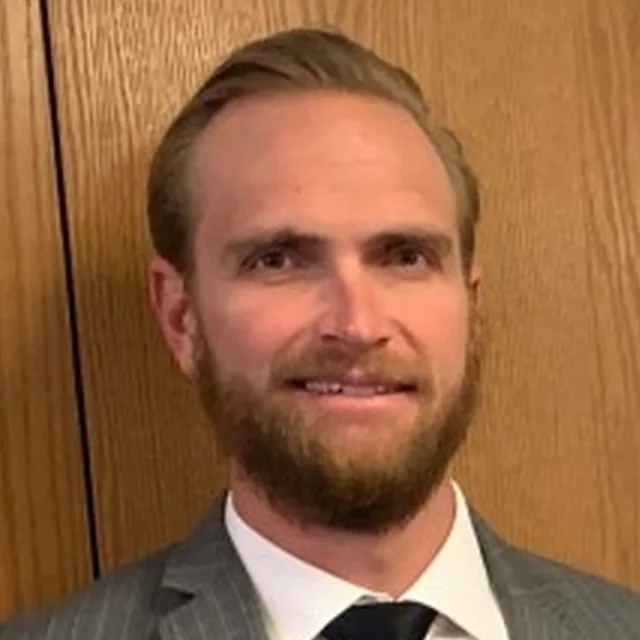
Dennis Blackburn is the president and owner of Blackburn Build, an exteriors company in Salt Lake City with 80 to 100 people, much of its work on custom homes in Park City. He graduated into the 2009 recession, spent twelve years in exteriors, and started his own company in 2017. Dennis explains why most of his work comes from contractors who keep coming back, why he only takes on what his own crews can do, and how a client's AI renderings showed him where the industry is going.

Dennis Blackburn

President and Owner, Blackburn Build · Salt Lake City, Utah

The short version.

  1. 01

    Your history tells you you can

    Ten years in, Dennis still wakes up some mornings doubting himself. What gets him through is looking back: twelve years of obstacles he didn't think he could get past, and did.

  2. 02

    Keep the work in-house

    Where a lot of his competition brings in subs when they're stretched, Blackburn Build does the work with its own crews, because that gives it more control over safety, quality and budgets.

  3. 03

    Only take the work you can do

    After a former boss said a brutal job was worth it because it made money, Dennis set out to take on only what his crews can handle, and he turns down jobs when they're full.

  4. 04

    Don't let sales over-promise

    Dennis is the main salesman himself, and his estimators and project managers know what the company can and can't do, because over-promising on a $10 million house costs you the customer.

  5. 05

    Win the contractors, not the one-off jobs

    Blackburn Build doesn't run social media ads. It finds contractors who build several homes a year, does an A-plus job on the first projects, and gives them no reason to ask for another bid.

How Blackburn Build turns a contractor into steady work.

Dennis's pipeline, as he described it on the show.

Before

One-and-done jobs that might bring a referral

Now

Contractors who keep sending homes, some 15 to 20 a year

  1. 1

    Find contractors who build a lot

    Look for contractors who do multiple projects a year, since keeping one of them happy is worth more than any single job.

  2. 2

    Make the first jobs count

    Offer a big discount on the first project or two, and do those jobs exceptionally well.

  3. 3

    Give them no reason to shop around

    An A-plus experience on every job keeps them from asking for another exteriors bid, beyond the odd check that the pricing is still honest.

  4. 4

    Say no when you're full

    If the crews are slammed, turn the job down and keep the door open, because botching one job for a new contractor ends the relationship.

Into exteriors through a recession

Dennis fell in love with construction building a family cabin in Scofield, switched from architecture to construction management at BYU, and graduated in 2009, when the program’s placement rate dropped below 50%. He started as a laborer for a flat roof company, then spent about twelve years with an exteriors company before starting Blackburn Build in 2017.

Doing only what his crews can do

Blackburn Build keeps the work in-house, with about 12 foremen and their crews, because that gives Dennis control over safety, quality and budgets. He takes on only what those crews can handle, sells the jobs himself so nobody over-promises, and turns contractors down when the schedule is full.

Where AI is catching up

A client asked Dennis for exterior renderings, and while he explained that a designer would take time and money, she made her own with AI in a day. He still prefers designers for $5 to $10 million homes in Park City, but he sees renderings and plan takeoffs as the next things to bring in.

Chapters and transcript.

The full conversation, lightly edited for reading. Bracketed text marks a cut or an edit. Pick a chapter or a timestamp to jump there.

00:05

David V. Kimball

Welcome to Retooled, a show where we talk to business leaders about how they've equipped their organization to adapt to change over time. I'm your host, David, joined as always by my co-host, Dylan, and we are here to talk to Dennis Blackburn. Dennis is the president and owner of Blackburn Build, based in Salt Lake City, Utah. We're going to dive in, as always, to how Dennis got his start in the business. How it's evolved, the rapid changes in the marketplace since. And so with that, please introduce yourself, Dennis, and tell us a bit about you.

00:37

Dennis Blackburn

Yeah, so my name is Dennis Blackburn. Born and raised in Price, Utah, central Utah. And I would say I first got my love for construction when I was about 16, 17 years old. My family started building a cabin in Scofield. So that's where I first really kind of fell in love with it. And then decided, I initially decided to go into architecture with that. So I started the architecture program up at the University of Utah and then realized architecture is primarily sitting at your computer the whole time and not a whole lot of field work. So it wasn't a hard decision for me to change from architecture over to construction management. So I transferred over to Brigham Young University and got my construction management degree there after four years. So I graduated in 2009. The employment rate or the placement rate at BYU in 2008 was 100% out of construction management. The year I graduated in 2009 dropped below 50% because of the economic downturn, I guess you could call it at that time, the recession. So I took on a job as pretty much a laborer for a flat roof company. It was just the best that I could get at the time, just an hourly. job trying to make ends meet, but it was good. It was a good boss. He taught me a lot. It was good hard work. He eventually moved me into an estimator role where I helped out with some of that, but then a little while after that, I got a better job offer at a construction company called Lone Star Builders. So, Lone Star Builders eventually kind of morphed into eGreen. They focus in exteriors. So, stucco, stone, siding, you know, stuff like that. So, I worked with them, the combination of those two companies. I was probably about 12 years of working with them. And then after doing it with them for a long time. I decided I could do it myself and wanted to give it a shot on my own. So that was 2017. So next May, May 2027, that will be our 10 year anniversary.

02:56

David V. Kimball

Congratulations. What were the signals that led you to that decision? You said you were ready to do it on your own and then you get hit with a pandemic and other things. So how did you know you were ready?

03:08

Dennis Blackburn

I didn't. Ten years in, I still wake up some mornings thinking like, what the hell am I doing? I'm not qualified. qualified. I, you know, I don't, you know, you, It's really easy to look around and look at other business owners and think that they've got it all together. But my guess is we're all equally insecure and waking up wondering, you know, am I cut out for this? But for me, yeah, about 10 years ago, it was a combination of I want I did want to do something on my own. There was stuff going on in the other company that I just didn't, it was really difficult and I didn't see a way out. I didn't see light at the end of the tunnel. So far enough into my career that it was like, so what am I going to do, quit and go apply for similar jobs and make the same amount of money and be in the same boat? Or do I want to take a risk? And it was hard. There was definitely. There was definitely some, I guess if you want to say, spiritual feelings that I felt that was like, that kind of gave me the confidence. Like me on my own, I didn't have the confidence, but a few experiences I had, and then also a really supportive wife who said, we got this. That made me decide to give it a shot.

04:32

David V. Kimball

That's awesome. I love that.

04:33

Dylan Baker

We see a pattern with... You know, like these business owners in like the contracting space. Everyone has, just about everyone I think has talked about like their supportive family being around them throughout the process, like especially like their partner or their wife or whatever. And I think that's really cool because I couldn't imagine like not having someone like that around and, you know, taking the big leap and, you know, putting all your chips on the table. And then maybe just having like, I don't know, your old superiors maybe guiding you through it, but they're not going to be at home for you at the end of the day. Yeah.

05:13

Dennis Blackburn

And to your point, you can't be that vulnerable with the people that you're working with or a boss. You can't go to them. Wide open, like, you know, almost in tears at times. You got to kind of put on a face, but you can go home to your wife and you can you can be as wide open and as vulnerable as possible. And, yeah, to your point, this may be a little TMI. You guys can decide to keep it in or pull it out. But me and my wife had been we were married, divorced and then remarried. So we started this business kind of that time when we were remarried and just starting that path again. So it was good for our marriage and it was good for us and it was good for the business because to your point, getting advice from siblings or peers or stuff like that, that was helpful and I definitely chalked that up to an advantage. But having a spouse and a wife, like I can say with 100% certainty, I wouldn't have done it. I wouldn't have done it and I wouldn't have been able to do it without her.

06:18

David V. Kimball

Congratulations for reuniting. That is amazing. That doesn't always happen. So that was probably a lot of effort. So props.

06:25

Dennis Blackburn

Yeah, thank you.

06:27

David V. Kimball

Yeah, that's amazing. Yeah, like Dylan said, just like the family being so integral in the business. It's like if you run your own org, or you have your own business, your family comes along for the ride, whether they want to or not, and it becomes almost entangled out of. How it's designed. You can't, when you go home, maybe you're off the work site or you're not in the office, but you're still thinking about it in the back of your head and you're still worried about it. And so a really understanding spouse and a patient spouse that understands that is someone you want to hold on to. Now, I would argue, hold on to them, whether they do it or not, because you're married to them. them but um But yeah, that that's really inspiring to hear about. What was probably the biggest challenge that you faced during that period that you overcame? And what did you do to overcome it?

07:17

Dennis Blackburn

Oh, man, there's probably a list of challenges. challenges. The biggest one was the self-confidence that I was talking about. Like I said, I've been doing this for a couple of companies for a lot of years. But to say, OK. That whole team I've been working with, you guys are out and now it's just me because it was just me. I didn't I didn't have employees. So I was I was cleaning up job sites. I was estimating. I was project managing. I was getting my contractor's license. You know, it was everything. And it's like, did is that self confidence there? And it wasn't, it's taken a little bit of time. But I would, one thing that helped me, I don't know if you guys have read that Greenlights book by Matthew McConaughey. But he was talking about some of his, oh no, sorry, it was a Dax Shepard. He does, what's the name of this podcast? Armchair Experts. With his wife? He does it with this lady named Monica. I don't know their relationship, but it's not with his wife. I think he does do another one with his wife, but this is with a lady named Monica. But I remember in one of those podcasts, he was talking and he said he was always felt with this doubt and kind of this imposter syndrome, like I can't do this. I can't do this. I can't do this. And then he got to this point where it's like, you know what? It's been 20 years of me telling myself that I can't do this. And over these 20 years. I have been doing it. So even though I have this like doubt and questioning of I can do it, I can now fall back on my history. I can look back on my history. And even though if I even though I might be having some self doubt, I can look at my history. My history tells me actually you can do it. And you've in you know, in these 20 years or in my In my experience, in these 12 years of working for somebody, you have been able to do it. So, you know, you can keep telling yourself you can't, but your history tells you you can. So I'm going to I'm going to lean into that. So that was my biggest hurdle, kind of, you know, jumping that hurdle of you can't do this, too. You've got a lot of years telling you that you can't do it.

09:32

David V. Kimball

Yeah, it's like how much evidence would there be? Well, how many how much evidence is it required to remove the imposter syndrome? And it's probably like an endless list. Like it's probably impossible. Whoever solves imposter syndrome is gonna make a lot of money.

09:47

Dennis Blackburn

Yeah, and he goes into that. He's like, yeah, I could write a book on every and he said he's like, it wasn't. And this is my case as well. I don't have 20 years or in my case, 12 years of just cruising through and it just works out. I've got 12 years of obstacles and hurdles and things that you didn't think that you could overcome that you did overcome. You know, COVID, you guys brought up COVID. I've got this in my book now, my book of life that like, wow, you. You actually can do this. So you can wake up and have all the self-doubt you want, but you've got the history on your side to tell you that you can't do it.

10:29

Dylan Baker

Yeah, definitely. Definitely agree. It's like you like come up to a mountain and like you decided you want to go around it or you can go over it. And it's like the mountain is like part of the journey. You know, and like, you just got to keep going forward because, you know, like, like you said, you look back at all the stuff you've been through and, you know, you reflect on it. You're like, man, I have been in way worse situations than I am right now. And this is this is what I'm worried about. Seriously. And then you kind of feel like that sense of euphoria before. I'm like, OK, like if I dealt with that, you know, in the past, you know, I can navigate whatever situation I'm in now.

11:04

Dennis Blackburn

Yeah, and to your point, I kind of hinted towards when I was leaving that other company, there was some stuff going on and I needed to get out. And one of those things, the big thing was this big job that I was running in Boise, Idaho, that was just, it was just beating the crap out of me. And to your point, I could go around the mountain or I could go over the mountain. And I just thought that Boise job was something that I couldn't overcome. And then I did. And right after, you know, we finished it, it was like, oh, man, I hope I never have to experience anything like that before. That was over 10 years ago. And now since then, there's been there's been Boise's on steroids, you know, that have been so much harder, so much worse. And it's like, I've got the playbook. Like, I've got that experience. I went over the mountain once. So, you know, let's do it again.

11:56

David V. Kimball

I love it.

11:57

Dylan Baker

Awesome. Your immediate team right now, how big is it?

12:03

Dennis Blackburn

So we have, I've got two estimators. One estimator that's been with me for quite a few years now, and we just hired another one that we're training. We've got three project managers. I just hired a fourth project manager that should be starting with this soon. And then three, probably four here in a little bit, superintendents that are a little more on-site oriented. And then outside of them, we have. About 12 foremen that are over their crews. So when you add up the foreman and their crews, that's about kind of depending on the season, but between 80 and 100 employees.

12:42

Dylan Baker

Nice. And then you obviously work with some sort of like subcontractors and stuff when you get bespoke work you can't handle or are you doing everything in-house?

12:51

Dennis Blackburn

We try and do everything in-house. Other companies I've worked for, not even other companies I've worked for, but it seems like a lot of our competition will go out and find subs and they'll go find somebody to help them out in a bind. I have learned that you don't have the level of control that you need with those types of employees. At the end of the day, it's almost they feel like they're a sub and some of them are good and some of them not so good. But The more that we've been able to do in-house, the much better we've been able to do with safety, quality control, budgets, all of that. We just have more control over the overall process.

13:31

David V. Kimball

Interesting. Nice. Why do you feel like so much of your competition is used as subcontracts? I mean, most of the people that we talk to use them. Is it a capacity issue? Is it a resources issue? What does it come down to, do you think, most of the time?

13:47

Dennis Blackburn

I think it's a capacity issue. And a lot of that has to do with, I do feel like a lot of my competition and this probably comes from, you know, the recession and hard times. And it probably just goes back to Homo sapiens DNA that you, you gather what you can, you know, that that goes, I don't know if you guys have read the book sapiens, but it talks about that, that Um, our, our ancestors, you know, if, if they came across food, they would hoard and get as much as that food as they could because they didn't know when they were going to eat again. Right. So I think that is similar in the contracting world. It's, it's kind of a tough world out there and you, any work you can get, you're going to say yes to. And sometimes that can be to a contractor's demise. I feel like the last company I worked for did that to a point where you would run through project managers and you would you would ride your best horse until that horse couldn't give anymore. So I do remember getting lunch with one of my bosses and we had just finished a job in Logan that kicked my butt really good. And I remember asking him, like, after seeing this job and what it's done to me, would you do this job again? And I didn't say like I didn't make it that personal, but like it took a toll on the whole company, like it took a bunch of our resources and was hard on me. And his response was. He said. We made money on it, or in other words, I made money on it. He made money on it. So yeah. So that answer rubbed me the wrong way. So since I've started this company, I've made sure to take on the work that we can. So this is a long answer going about and saying other people are going out and scrambling and finding subs and finding people to just throw at their job because they've taken on so much work that it's like I. You know, my A crew, my B crew, they're busy at other jobs. I got to go find another C crew and we're going to cross our fingers that their quality is good. And then sometimes, you know, it's just a gamble at that point. So I've always, I've burned a couple, not burned bridges, but I have had to go to contractors and say, we would love to do this job. But it's not going to benefit me or you if we take it on.

16:11

David V. Kimball

Interesting. Where my mind goes, I'm very systems minded. If you have internal tooling or you have software or you have these platforms that you use internally, I can imagine trying to leverage it with subcontractors can be another headache. So I'm curious, have you been able over the years? Part of this podcast is talking about the changes over time that you've done technologically, too. So I'm interested, what changes have you seen from when you started in 2017 till now from a technology standpoint? And have you gotten it tighter and more like processed and like fine tuned over the over the years?

16:49

Dennis Blackburn

Yeah, I think I brought this up to you in that email that a little bit of hesitancy that. That is not my strong suit. I believe in hiring the right people to do what you're not good at. Right. So because I'm not good at that, that's kind of been my latest dilemma or what's on my mind is who am I going to hire? What am I going to do to get me to that next level?

17:16

David V. Kimball

Well, I guess I'm not even interviewing you as an expert in that area. I'm just saying as an owner, how do you deal with those challenges? Like you clearly have problems. Everyone has problems in that area. So like, what's your what are your impressions and how and you mentioned hiring someone to do it? Like what what what's the necessity of that? What is what causes you to want to do that?

17:36

Dennis Blackburn

So looking at other industries and seeing how AI has affected it and helped it has been a big thing. I think the construction industry is a little bit further behind and because the industry itself is more hands on and more Objective, I think we're a little bit further behind on incorporating some of those things, but it's just a matter of time before it catches up. So you asked, well, what are some of those things? things. I would say first and foremost, like I've got a lot of customers that come to me and say, okay, this is our house or these are our plans. I don't like this exterior. Can you render me up something that can take care of that? It's like, oh, well, we got to get a designer. They have a retainer of $5,000. You need to work with them directly. Like, I'm realizing that my competition and other people are saying, okay, I'm going to swing by your house. I'm going to take a couple pictures of it. I'm going to plug that into AI. I'm going to tell AI that you want blackboard and batten. You want black softened fascia. You want a natural stone. You, you know, incorporate these into my. If I don't do that and if I keep pushing them to a designer that's going to charge a bunch of money and you have to wait four weeks, then I think that's going to cause, I think I will miss out on a bunch of opportunities where a salesman from another company goes and says, yeah, I'll send you something tonight. And they just throw in a few pictures and a few prompts to chat GPT. They've got a rendering.

19:07

David V. Kimball

Totally. I think you're right on the money with that. One thing my wife is doing is we're about to repaint our house. And what she has done is she has taken listings from Redfin and then just said, sent it to Gemini and said, make this a different color. And then just getting feedback. Right. And that took literally almost zero effort to do. So I think that is generally becoming the expectation now is like, oh, yeah, my. Whoever I'm working with is going to have a magic machine to just render whatever I need on the fly. And it's funny because not all things are created equal. Some things are pretty trivial to do, but some things are not and require a lot of complexity. And so that's not what that's not necessarily what the end. I say the end user is very technical, but like that with the prospect or the customer even realizes.

19:48

Dennis Blackburn

Yeah. Yeah, I did get embarrassed by that. It was probably six months ago when I had a client, you know, they came to me with this exact situation and they said. They were building their home. So all they had was a set of plants. They came to me and they said, hey, we have these plans. These are some ideas that we have for our exterior. Could you render us up something? And I did the whole. Now it's going to take a while. Here's here's a few contacts of designers that you could work with. You know, let's go that route. And then like a day later. She sent me the renderings that she had created on her own, like through, I think it was Claude. And it was like, and so here I was explaining that, oh, like, no, that's a big deal. That's going to take some time and that's going to cost some money. And then she did it in one day. Wow. So that was kind of this, you know, this realization that, you know. I still like to push things to the designers because that way that alleviates us of some responsibility. Because even with AI, it's like they render up something and then you go and you do it in real life. A lot of our work is in Park City, you know, five, ten million dollar homes above that, you know, and so you're dealing with AI and you're dealing with this rendering and then we go and we do it in real life. We deal with a lot of customers that it. Trying to explain to them to get things perfect, to get things exact. It's going to look identical to this rendering that you gave us. That doesn't always, and most customers get it, but we deal with some pretty special clientele, but those conversations are hard conversations. So I do still prefer to send them to designers, but for a lot of this stuff, I've got to get on board with. What's going on there?

21:37

David V. Kimball

Yeah, it's almost an expectation setting exercise where it's like, yeah, maybe we can whip up something quickly, but like, don't like, you can't say this literally the way that I'm saying it now, but like, don't expect it to be exactly how it looks on you on this like quick mock-up render. This is just to be like an inspiration point or a quick reference. If you want it done properly, which this is how it should be done. If you want, you know, we were talking to somebody else who had a background in sales and he was really good about. Not over-promising. Yeah, not over-promising. Not over-promising. And then steering the conversation in such a way that the person feels like it's their idea. Like they come to the conclusion like, oh, I shouldn't rely on AI for everything. You know, because you could frame it like, well, we can. This is a silly example that doesn't really apply. If we use the AI design, we're going to avoid our normal warranties because it's not through our normal process. But if you want the standard warranties, then you go through this channel. Then they go, oh, I want the warranties. So then they pick that one, you know, as an example or whatever.

22:37

Dennis Blackburn

Yeah, yeah, no, that's a great point. The last company I was with and that Boise job I mentioned, the structure of that company was they had salesmen. They had guys that went out and they sold jobs. They got a little bit of a commission from that, you know, and that's fine. A lot of companies operate that way. But what that does do is that does that that does open the door for the over promising. Because the salesman, he's not the project manager. He doesn't care about the operation side. Once the job is sold, he's out. And I do think there's a way to probably have a salesman that has more accountability with the job. But this Boise job, he was out. And I'm the project manager. It gets handed over to me and I have to deal with it from there on. So that over-promising is huge. And within my company, I've made it a point that I guess I would be considered the main salesman. Because I do like to go and be transparent about like, you know, you know, they have this list of things they want. And if it's a salesman that's commission based, it's like, yes, yes, yes, we can do that. We will do that. We'll we'll do it better than that, you know. And then and then the operations guys take over and it's like, we can't do that. It's not even realistic. Realistic. You know? So I've made it a point to be really involved with the sales as well as my estimator and my project managers are very. Well-versed in what we can and can't do so that, you know, we don't, you don't, you just can't over-promise because when you, if you over-promise on a $10 million house and they don't get what they thought they were getting, you, you, you lose a customer, you burn a bridge, you, you know, you're redoing something. It's just that the repercussions are big from that.

24:15

Dylan Baker

Yeah, totally, totally get it. I wanted to ask, um, your, your current, like, Channels for leads and stuff coming in. What avenues are you exploring regarding that?

24:29

Dennis Blackburn

We've been really lucky. Like you can go look at our Instagram and I just I should be more involved. But that social media advertising, we just don't do any of that. We've been really lucky. So when I left that other company, I was so burned out on exteriors that I said, I'm not doing exteriors. And it just, it took a couple months of previous contractors that I work with have been calling and saying, hey, we didn't work with your previous company because of them. We worked with them because of our relationship with you. So when, you know, will you come to our exteriors? For the first few months, it was no. No, no, I'm not going to do them. And then little by little, it's like, what am I doing? I've got I've got old contacts that want to do the work. I've got old contacts that are asking us to do the work. Let's let's get into this. So my priority since then is to be able to find contractors that do multiple projects a year. And do whatever it takes to keep them happy. Because, you know, the one and dones, you know, a family friend that wants their exterior, sure, that's great. Maybe they'll refer you. But if you go make the contractor happy, then, you know, he does four or five homes a year or, you know, we have some that do, you know, 15 to 20 homes a year. You make them happy and you give them no reason to go ask for another. Exterior bid. Sometimes they will just to make sure that you're being honest and your pricing is still good and all that. But if you if you give them an A plus experience, then they that that is a returning customer. So that has been our pipeline. Find a contractor. Maybe on the first project or two, offer them a big discount. Make you know, just kick, kick butt on those first couple projects. And they will they will continue to feed you the work.

26:26

Dylan Baker

Amazing. I love it. I don't think we've heard that one before yet. Have we, David?

26:31

David V. Kimball

No, but it sounds like the most ideal option. I think if people could say, oh yeah, I don't need to spend all this money on advertising. I can just have this framework that works ridiculously well, that's repeatable. I think people would sign up for that.

26:42

Dylan Baker

That doesn't really cost me any money. I just have to be friends with the contractors. That's awesome.

26:49

Dennis Blackburn

Yeah, we've been fortunate. My sister owns a jewelry business and I can't believe that... Their budget for what they have to pay for advertising. I've got a good friend who's a roofer and the money that he has to spend to go get these re-roofs. And so we have been fortunate. But I would say if you have that opportunity, identify the clients that will bring you continued work and prioritize them. I'm not saying don't prioritize the one and dones, but those returning clients, that's... That is the biggest key to making sure you have continual work.

27:29

David V. Kimball

Totally, totally makes sense. Yeah, you mentioned that you like to do a lot of your things in-house. You've structured that that way on purpose. Is there any vendor or partner organization, though, that you've worked with recently that you want to give a shout out to and a name drop? You don't have to, but it's something we like to ask our guests.

27:50

Dennis Blackburn

Yeah, it's almost like one of those. You know, if you if you win an Oscar, an Emmy, like you get up and who are you going to forget to give credit to? This this isn't this is kind of a side answer to what you're saying. First and foremost, we are who we are because of our actual employees, the in-house people, our our laborers, their their craftsmanship, their their love for what they do. It's just. That they get every shout out and every possible praise I could give, it goes to them. Aside from that, we have some vendors that have just been amazing. KIC Exteriors, Christian Peck, I've known him for since I started, you know, in the exteriors world. About 20 years now. But just guys that you can call and they get stuff done and they make things happen. So a lot of our vendors are that way. Again, I don't want to start saying names because there's too many of them. But Curtis Caldwell, LMW Supply, I guess it's ABC now, but… Yeah, I'll leave it at those two because there's too many other people I'm going to leave out and offend. But just so many great people that have helped us along the way and given us a bunch of help.

29:06

David V. Kimball

No, thank you for doing that. I know it can be tough sometimes when there's so many important people to mention. So thank you for that. I'm also interested, you know, your clients range from custom home builds to retail build outs. So. When you do these bids, how would you price a custom one differently than like a retail one, for example?

29:32

Dennis Blackburn

Our pricing stays pretty. No, it doesn't. I was going to say it stays pretty. This is pretty same. But every job we consider ourselves pretty custom. So we look at everything, you know, like stone is going to be. $20 a square foot. But if you price all your stone at $20 a square foot and then you go to this big, huge job in Park City and all the stone is just on these massive columns that's all corner and all detail and it's all intricate, then you're going to lose money. So, you know, we don't do a lot of. I hope it's not an offensive term, but we don't do a lot of cookie cutter projects. We don't do, you know, a lot of mass building neighborhoods and stuff like that. So, you know, we don't have the luxury of being able to just go through a plan, blow through it. Oh, that goes back to AI. The other thing I would need to incorporate into AI. I know there's got to be a way to throw in a set of plans. Ten minutes later, get a feedback if you have X amount of stucco, X amount of stone. So anyway, but. But... What I was saying before that was we just don't do a whole lot of these cookie cutter homes. So every project, pretty much every project, me and my estimator are going through it and saying, OK, stone, our base price is $18 a square foot, but these are all radius arches. So we've got to figure a little more labor in for that. All the windows have returned corners. So corners. Corners cost you know quite a bit more than the flats on the stone so now that we have all these extra corners on the windows we got to factor that in every project we're pretty much looking at and coming up with custom pricing whether that means we can get more aggressive and save them money and get the job or you know we were catching things that others are missing and bringing up to the contractor and saying, look, you can go with this lesser number if you want. It's going to save money. But did they factor in these radiuses? Did they factor in all that wall cap? Because you got 800 lineal feet of wall cap that's in the landscaping plans. Did they catch those? You know, so every plan is different. Every project is different.

31:41

David V. Kimball

Dylan, I know we're wrapping up here pretty soon. Do you have any other questions you want to ask Dennis while he's here or any other thoughts you wanted to share?

31:51

Dylan Baker

Dennis, I've skied Park City a handful of times. Have you guys ever built any of the houses like on the resort itself? Worked on any projects there?

32:01

Dennis Blackburn

Yeah, so we've been on the Park City side of things. We've been in the canyons. We've we've been Sky Ridge is a big community going on right now, which is just on the other side of the 40 by Jordan L. And it's part of that Mayflower community. We're working on the Velvair project with Mint Construction, which is right there in Deer Valley or Deer Valley. Awesome. East, I'm not sure what they're calling it, but it's that whole new side of Deer Valley. Marcella is going to be big for us. Red Ledges, all these neighborhoods are just, they're insane, but they've been good for us.

32:43

Dylan Baker

Yeah, I don't know, David, if you ski or not, but like Park City is like the biggest resort. Like I think like North America, like it's. One of the biggest in the world, but some of like the lifts and like, like the ski runs that go through like actual neighborhoods and like there's houses that are like on the resorts, like people can like drop in out of their backyards. It's, it's nuts. I couldn't imagine owning a house there, but it's definitely a lot cooler than Tahoe in my opinion, but that's just me.

33:13

Dennis Blackburn

Yeah, there's a couple spots. I'm a snowboarder. But I'm going to learn to ski this year. There will be a couple spots I can get on the ski lift with my kids and start going up and saying, we did that one, we did that one, we did that one. We're working on that one right now. That's fun.

33:31

David V. Kimball

I love it. How old are your kids?

33:34

Dennis Blackburn

They all just had birthdays. So 15, 11, and 8.

33:40

David V. Kimball

Man, that's awesome. Yeah. I love it.

33:44

Dennis Blackburn

I do get calls every now and again of contractors that say, Hey, we'd like to start working with you. But that does go back to what I was saying before. Like if we're, if we're loaded and we're slammed, I'd rather keep a door open with a contractor instead of say, okay, let's do this job. Because if you botch the job once you're out, you know, you're, they'll find another exteriors company. If you've done 10 homes for them and you botch one, then they'll have a little more grace with you. But if I tell Corey or whoever it might be that like, Hey, we're going to figure out a way to do this. And then we do it and we we boss the job. So so there are contractors that call. And if we can't do it, I'll I'll tell no. And at least you're honest.

34:23

David V. Kimball

Awesome. Well, Dennis, where can people find you if they want to do business with you or just connect? What's the best place to get in touch with you?

34:31

Dennis Blackburn

We do have a Web site. I wouldn't. I wouldn't use that, though. Okay. My wife does kind of check the Instagram and all that. So there is a way to DM us. It's just Blackburn underscore build. I would say best way would be to email me. It's Dennis with two N's at BlackburnBuild.com. We pride ourselves in communication, so if you email me and get a hold of me, it's my direct email. I'll get a hold of you and we'll chat.

35:04

David V. Kimball

Excellent. Well, thanks so much for your time. This is a really great episode and for everyone listening, we'll catch you on the next one.

GET STARTED

Find out what you could stop doing.

We take the repetitive work that eats your week and automate as much of it as we can, so you can spend your time on meaningful work that moves the business forward.

Smiling woman holding a smartphone at the center with orbiting logos of programming languages and platforms including Swift, Ok.ru, and others.