
What is Vendor Lock-In and How to Avoid It
In today’s fast-paced digital world, businesses rely on a myriad of tools and platforms to keep things running smoothly - from email services and CRMs to website builders and cloud storage. But what happens when you’re tied to one provider so tightly that switching feels impossible? That’s vendor lock-in, and it’s a trap many small businesses fall into without realizing it. Over the 15 years of experience we have in marketing, design, and software development, we’ve seen how vendor lock-in can drain resources and limit growth. In this post, we’ll break down what vendor lock-in is, why it matters, and how you can avoid it to build a more flexible, cost-effective tech stack.
Defining Vendor Lock-In: Single Cloud vs. Multi-Cloud
At its core, vendor lock-in occurs when your business becomes overly dependent on a single provider’s ecosystem, making it difficult or expensive to switch to alternatives. Think of it like being stuck in a long-term contract with hidden exit fees - and not just financial either, but also in time, data migration, and compatibility issues.
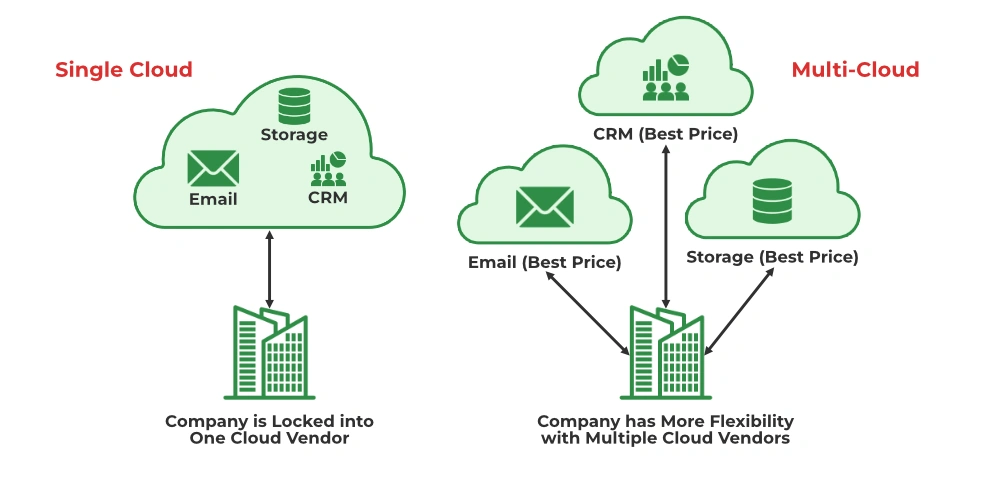 Image by GeeksForGeeks.org
A great way to visualize this is through the lens of cloud services. In a single-cloud setup, one company handles everything: your email, storage, CRM, databases, and even your website. It’s convenient at first: everything integrates seamlessly. However, if that provider hikes prices or changes terms, you’re stuck. On the flip side, a multi-cloud approach lets you pick the best tool for each job: the top platform for email, another for CRM, and a third for storage. This flexibility means if one service underperforms or gets too pricey, you can swap it out without disrupting your entire operation.
Most agencies and web partners often default to single-cloud solutions for simplicity, but as experts in building lean systems, we know this rarely delivers the best value. You’re stuck paying for the lack of options down the line. This principle applies broadly - we’ve seen similar issues in industries like real estate where platforms like Zillow create dependence that hurts your bottom line.
Everyday Examples of Vendor Lock-In
Vendor lock-in is something you’ve likely encountered without knowing it. Let’s look at a couple of relatable examples.
Proprietary File Types vs. Open Formats
Remember trying to open an Excel file in another program, only to have the formatting break? That’s vendor lock-in in action. Proprietary formats like .xlsx (Excel) or .docx (Word) are designed to work best (or only) within their native apps. If you switch software, you might lose functionality or spend hours reformatting.
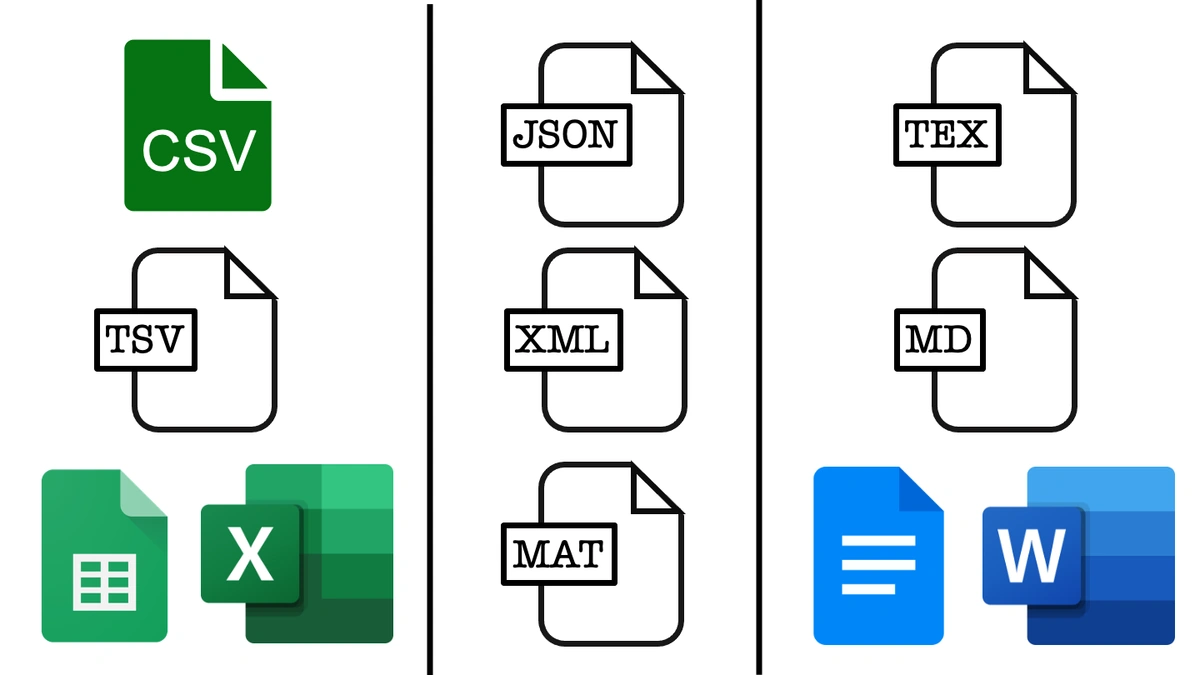 Image by Zak Varty
Contrast that with open formats: CSV for spreadsheets or Markdown/Text for documents. These can be opened and edited in almost any application, giving you freedom to choose tools that fit your needs. While many platforms now handle proprietary files due to their popularity, the underlying lock-in still exists, forcing you to stay within the ecosystem. Adopting a single source of truth approach with open formats helps maintain flexibility.
Website Builders: The Hidden Costs of Alleged “Convenience”
Website platforms are a hotbed for vendor lock-in. Take Wix, for instance. Their plans range from $16 to $89 per month, but what do you really get? Limited storage (as low as 2GB on basic plans), restricted collaborators, and features like custom code integration locked behind higher tiers. Squarespace follows a similar model, with pricing that feels steep for the value.
Then there’s WordPress.com: A personal plan might seem affordable at around $4/month, but it skimps on essentials like Google Analytics integration (only available at the $8/month premium level). Want to do something as simple as embed code in your site’s header? You need to pay extra for that. These platforms purportedly make building a site easy, but they trap you with proprietary tools that don’t export cleanly.
We’ve worked with clients on these platforms, and if they’re happy paying the premium for a platform they enjoy using, that’s fine. But for businesses aiming to be lean and efficient, this is usually a miss. You’re limiting yourself in customization, agility, and scalability. Understanding how to calculate your marketing ROI helps reveal these hidden costs.
The Real Impact: Why Vendor Lock-In Hurts Your Bottom Line
Beyond the frustration, vendor lock-in has tangible downsides:
- Rising Costs: Providers can increase prices without much notice, and switching is prohibitive due to data transfer fees or rework.
- Limited Flexibility: Need a custom integration or API that’s not supported? You’re out of luck if it’s outside the platform’s ecosystem.
- Data Traps: Exporting data from a proprietary CRM or website builder often requires custom workarounds, leaving you vulnerable.
- Missed Opportunities: You’re locked out of innovative features from other providers, stifling growth.
In our experience helping small businesses optimize their stacks, we’ve seen companies save hundreds (and sometimes even thousands) of dollars monthly by using a more modular approach. Organizations should concern themselves with owning their tech and being able to adapt quickly.
How to Avoid Vendor Lock-In: Adopt a Developer Mindset
The good news? You don’t have to stay trapped. By embracing open protocols, multi-platform options, and a adopting a developer mindset, you can build a resilient system. Here’s how:
Choose Open and Modular Tools
Prioritize platforms that use open formats and make data export easy. For websites, skip proprietary builders and go custom. We often use GitHub to host site files (it’s free even for private repositories) and deploy via Netlify, which has generous free tiers. With the CMS we build them - this setup lets clients edit their site like they would on Wix or Squarespace, but with full ownership.
For example, one of our HOA clients has a snappy site with calendars, resources, and contact forms, all built on raw files. They can interact with it with other software or even AI tools, push changes to their provider of choice, or switch deployers without hassle. It’s modular, performant, and costs little-to-nothing monthly. For a real-world example, check out our Firehouse Lawyer case study to see this approach in action.
Think Like a Developer for Maximum Value
Websites are just code and files. So, why pay a middleman? With developer capabilities, you can create a custom CMS and integrate any CRM, API, or feature you need. No more relying on plugins that need constant updates or paying for upgrades. This aligns with the vibe coding philosophy we advocate - using AI and modern tools to build efficiently.
This mindset extends to email, CRMs, and more: Pick best-in-class tools that play nice together, avoiding all-in-one giants.
The Benefits of Breaking Free
By avoiding vendor lock-in, you’ll enjoy:
- Cost Savings: Run sites and services for free or low-cost.
- Full Ownership: Control your files and data - no more traps.
- Unlimited Customization: Build exactly what you need, from automations to SEO.
- Future-Proofing: Easily adapt as your business grows.
At lilAgents, we specialize in these lean, high-value setups, blending marketing savvy with dev expertise to deliver modern, search-optimized sites. Explore our services to learn more.
Ready to Escape Vendor Lock-In?
If you’re a small business owner staring at your tech stack and wondering if you’re overpaying, or if you’re locked into a system that’s holding you back, it’s time for a change. Evaluate your providers: Are they open? Flexible? Cost-effective?
Get a custom website with a modern design, top performance, and seamless integrations for the tools you need, all without the lock-in.
Schedule a Free ConsultationThanks for reading, Stay tuned for more tips on running a smarter business!
Frequently Asked Questions
What Is Vendor Lock-In?
Vendor lock-in is a situation where a business becomes so dependent on a single provider’s products or services that switching to an alternative becomes prohibitively expensive, time-consuming, or technically difficult. This dependency often builds gradually as you integrate more deeply with a platform’s proprietary tools and formats. Over time, the cost of migrating your data, retraining your team, and rebuilding integrations creates a barrier that keeps you tied to that provider regardless of whether better options exist.
How Do You Avoid Vendor Lock-In?
The most effective way to avoid vendor lock-in is to prioritize open standards, modular tools, and data portability from the start. When evaluating any platform, ask yourself whether you can easily export your data in a standard format and whether the tool plays well with others through open APIs. Building your tech stack around interchangeable components, rather than a single all-in-one suite, gives you the freedom to swap out individual pieces without disrupting everything else.
What Are Examples of Vendor Lock-In in Marketing?
Marketing is full of vendor lock-in scenarios that many businesses don’t recognize until it’s too late. Website builders like Wix and Squarespace store your content in proprietary formats that don’t transfer cleanly to other platforms, so years of work can effectively be held hostage. Similarly, some CRMs make it difficult to export your full contact history and engagement data, and certain email marketing platforms use templates and automation logic that only function within their ecosystem.
Is Vendor Lock-In Always Bad?
Not necessarily, and the answer depends on your priorities as a business. If a platform genuinely serves your needs well, the convenience of a tightly integrated ecosystem can save you time and reduce complexity. The problem arises when that convenience comes at the cost of flexibility, when prices increase without alternatives, or when the platform’s limitations start holding back your growth. The key is to make the choice consciously rather than drifting into dependency by default.
How Do I Know If I’m Locked In to a Vendor?
A few telltale signs can help you figure out if you’re locked in. If the thought of switching platforms fills you with dread because of data migration headaches, or if your provider has raised prices and you felt like you had no choice but to accept, those are strong indicators. You should also ask yourself whether you can export your data in a clean, usable format and whether your workflows would survive if you moved to a competing product tomorrow.
What Is the Difference Between Vendor Lock-In and a Long-Term Contract?
A long-term contract is an explicit agreement with a defined end date, and once that date arrives you’re free to leave. Vendor lock-in, on the other hand, is a structural dependency that persists even without a formal contract. You might be on a month-to-month plan and still be locked in because your data is stored in proprietary formats, your integrations are built on a closed API, or the effort required to migrate simply outweighs the perceived benefit of switching.