
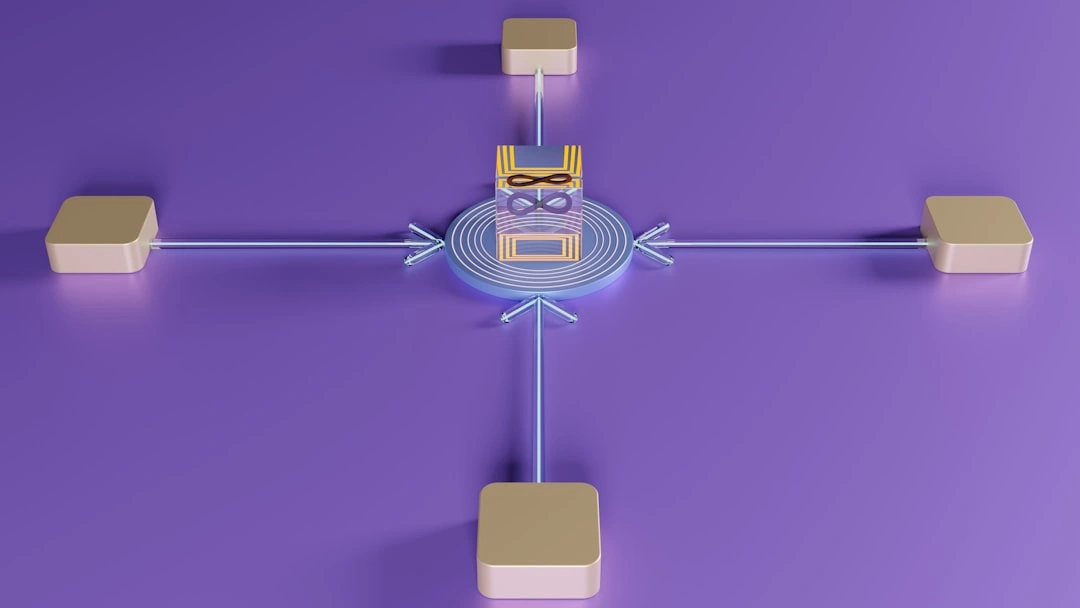
Picture a small computer on your desk or in a closet that does not need you staring at it. It checks status pages, chases receipts, updates spreadsheets, and hands you a summary when something actually needs a decision. Not a chat window you babysit; more like a clerk on the other side of a counter.
That is the direction AI workflow automation is heading: from “answer my question” to “run this loop until it is done or it hits a rule you defined.” Under the hood, that means durable loops, real tools, and humans who stay responsible for outcomes.
You can already see early versions. Anthropic’s Claude Cowork1 is built for knowledge work that touches real files on disk. Dispatch2, paired with computer use in Cowork and Claude Code, lets you assign work from your phone and pick it up on the desktop: one continuous thread instead of a hundred one-off prompts. Anthropic’s support article on assigning tasks from anywhere3 spells out how Dispatch fits into that workflow.
On the open side, OpenClaw4 describes itself as a personal AI assistant you can run yourself, with docs for browser automation5 so an agent can interact with the web like a user would. Different stack, same idea: a machine that keeps working when you close the tab.
None of this is “fully autonomous” in the sci-fi sense. It is a preview of the shape: AI agentic workflows that combine models, tools, memory, and permissions.
From Chat to Actions
AI workflow automation starts when a system can call tools, retry, and hand off work without you re-prompting every step.
A plain LLM session is reactive. You type, it replies. AI tools for business get interesting when the system can call APIs, run code, open files, or drive a browser, then loop until a stopping condition.
That is the difference between content drafting and AI workflow automation: the latter assumes retries, schedules, handoffs between steps, and guardrails when something goes wrong.
For marketing specifically, AI agents for marketing show up as research synthesis, campaign QA, structured reporting, and repetitive publishing checks. The win is not “the robot replaced the strategist.” It is “the strategist stopped doing the same thirty clicks every Monday.”
If you are optimizing for visibility in Google and answer surfaces, that same shift shows up as answer engine optimization: structuring information so both humans and systems can quote you accurately. We have been writing about that shift alongside broader digital marketing trends in 2026.
What the Data Actually Says
Enterprise Uptake and Agents. McKinsey’s annual State of AI6 research tracks how organizations deploy AI across functions. Their 2025 materials emphasize that usage is widespread, but value still depends on rewiring workflows, not bolting a model onto unchanged processes.
Macro Picture. The Stanford Institute for Human-Centered AI publishes the AI Index7. The 2025 edition highlights faster corporate adoption and heavier investment alongside governance questions. It is a good antidote to both panic and hype because it is data-forward.
Agentic Projects and Reality Checks. Gartner’s 2025 newsroom note on agentic AI projects8 warns that many agentic initiatives stall when costs, unclear ROI, or weak risk controls pile up. That lines up with what we see in the field: demos are easy; production is not.
Public Attitudes. Pew Research’s April 2025 survey on how the U.S. public and AI experts view risks and regulation9 shows a wide gap between expert optimism and everyday concern. Translation: even if your AI-powered marketing stack is “ready,” your audience might not be. Tone and disclosure still matter.
Research on How Agents Fail and Recover. Google’s MLE-STAR10 write-up describes an agent architecture with an outer planning loop and an inner test-driven loop. You do not need the math to use the lesson: autonomous systems work better when something independent checks their work.
The “Puberty Era” of Agents
I grew up in the 90s. The tech kind of worked, but you learned to troubleshoot because you had to. Later waves of computing got smoother. Then something broke and the “it just works” iPad kids had no mental model for what went wrong.
I’d argue we are in a similar stretch with AI for business. Models can draft, code, and route tasks, but they still hallucinate, misread permissions, and occasionally charge down the wrong path with confidence.
Anthropic’s own Dispatch and computer use announcement2 is explicit: computer use is early, macOS-only in preview at launch, desktop must stay awake, and users should start with apps they trust. That is not small print. It is the kind of honesty you want before you hand keys to anything.
My colleague Kevin went deep on the human responsibility side in Vibe coding: why the great divide: testing, reviewing diffs, and treating the LLM as a junior teammate, not an oracle. The same mindset applies when you design AI workflow automation for a real brand.
Bespoke software and automation that replaces SaaS. See how we build.
Explore development servicesWhen Agents Touch the Physical World
The next chapter is not only files and browsers. It is coordinating things that move: food pickup, rides, deliveries, maybe drones in controlled environments. Regulation, insurance, and plain physics will move slower than software.
So treat this part as directional, not a promise. The point is integration: your “second machine” becomes the place where digital intent turns into monitored real-world follow-through, with budgets, caps, and kill switches.
Where lilAgents Fits
We are an AI marketing agency in the practical sense: humans who know brand, SEO, and implementation, using AI tools for business where they actually save time or improve quality. We wrote up exactly where we draw that line, including what we refuse to hand to a machine.
For content marketing for small business, that might mean research assistance, structured outlines, and faster iteration, not auto-posting slop. For technical work, it means audited automation and clear ownership of assets, the same themes we covered in why we built lilAgents and vendor lock-in.
If you want a digital marketing agency for small business that prices closer to reality than enterprise retainers, that is the point: ship strong outcomes at pricing closer to what you’d expect from an affordable marketing agency, without giving up standards. See how we compare in best AI marketing agencies for small business in 2026.
Best AI for business is not a single model name. It is the combination of workflow, review, and people who know what “done” looks like.
Frequently Asked Questions
What Is AI Workflow Automation?
AI workflow automation is software that chains together multiple steps, such as reading data, calling external tools, notifying team members, and retrying on failure, instead of stopping after a single model response. It turns what used to be a one-off chat interaction into a durable loop that can run on a schedule, follow branching logic, and pause for human review when needed. In practice this looks like scheduled reporting pipelines, QA checklists that run before publishing, and structured handoffs between research and content teams.
How Do AI Agents Differ From Traditional Automation?
Traditional automation follows rigid, pre-coded rules where every possible path has to be mapped out in advance. AI agents, by contrast, can interpret context, decide which tool to call next, and adjust their approach when something unexpected comes back from an API or a data source. That flexibility makes them far more useful for tasks like marketing research synthesis or campaign QA where conditions change from run to run, though it also means they need clearer guardrails and human oversight to stay on track.
What Are the Best AI Workflow Automation Tools?
The landscape is moving quickly, so the “best” tool depends on what you are actually connecting. Anthropic’s Claude Cowork and Dispatch handle knowledge work tied to local files and mobile handoff well, while open-source options like OpenClaw let you self-host a personal assistant with browser automation. For marketing-specific workflows, the most important factor is usually how cleanly the tool integrates with your existing CMS, analytics platform, and ad accounts rather than any single feature on a spec sheet.
Can Small Businesses Benefit From AI Workflow Automation?
Absolutely, and in some ways small teams benefit more than large ones because the time savings hit proportionally harder when you only have a few people. A solo marketer who automates weekly reporting, link-checking, and structured content outlines can reclaim hours every week for strategy and creative work. The key is starting with one repeatable workflow that has a clear stopping condition rather than trying to automate everything at once.
What Tasks Can AI Agents Automate?
AI agents handle repetitive, multi-step tasks especially well: pulling data from several sources into a single report, running pre-publish QA across a batch of pages, monitoring status dashboards and surfacing only the items that need a decision, and routing customer questions to the right internal resource. They are less suited for tasks that require subjective brand judgment or nuanced creative direction, which is why the most effective setups pair agent execution with human approval checkpoints at the stages where quality matters most.
How Do You Implement AI Workflow Automation?
Start by mapping one workflow end to end, identifying every manual step, decision point, and handoff. Then pick the segments where the work is repetitive and the failure modes are well understood, because those are the easiest to automate with confidence. From there you wire up tools, set retry logic and spending caps, and build in a review step so a human can inspect outputs before they reach customers. Most teams find that the hardest part is not the AI itself but the data hygiene and authentication plumbing that connects everything together.
Footnotes
-
Anthropic product page for Claude Cowork: agentic knowledge work on local files, tied to Claude Desktop. Claude Cowork product page ↩
-
Anthropic blog: Put Claude to work on your computer (Dispatch, computer use, mobile handoff; March 2026). Same source for the “puberty era” section quote on limits of computer use. Anthropic blog: Dispatch and computer use ↩ ↩2
-
Anthropic Help Center: how to assign tasks to Claude from anywhere in Cowork (Dispatch pairing and workflow). Assign tasks from anywhere in Cowork (Help Center) ↩
-
OpenClaw open-source project (“your own personal AI assistant”; self-hosted). OpenClaw on GitHub ↩
-
OpenClaw docs: browser tool for web automation from agents. OpenClaw browser automation docs ↩
-
McKinsey QuantumBlack: The state of AI annual survey and analysis (enterprise adoption, value capture, org rewiring). The state of AI (McKinsey QuantumBlack) ↩
-
Stanford HAI AI Index Report 2025 (macro trends, corporate adoption, investment, governance). AI Index Report 2025 (Stanford HAI) ↩
-
Gartner press release (June 25, 2025): agentic AI project risk, cancellations, and enterprise adoption friction. Gartner: agentic AI project cancellations (press release) ↩
-
Pew Research Center (April 3, 2025): U.S. public vs. AI experts on AI risks, opportunities, and regulation. Pew Research: views on AI risks and regulation ↩
-
Google Research blog: MLE-STAR, an ML engineering agent with outer planning and inner test-driven loops (useful mental model for guardrails). MLE-STAR (Google Research blog) ↩