Brand Identity Design Services: What to Expect and How to Choose
You know your business needs to look professional. You’ve probably outgrown the logo you made in Canva three years ago. Maybe customers have told you your website “feels off,” or you’ve noticed competitors looking way more polished than you.
So you start Googling brand identity design services, and suddenly you’re drowning in options. Agencies quoting $2,000, others quoting $50,000, some promising a “full brand kit” while others just hand you a logo and call it a day.
Here’s the problem: most business owners don’t know what they should actually get from a brand identity project. That means they can’t evaluate what’s worth the money, and they end up either overpaying for fluff or underpaying for something incomplete.
Let’s fix that. This post breaks down exactly what brand identity design services include, what the process looks like, how to choose the right partner, and what red flags to avoid.
What brand identity design services actually include
A lot of people use “brand identity” and “logo design” interchangeably, but they’re not the same thing.
A logo is one piece of your brand identity: the mark, the symbol, the wordmark. It matters, but a logo by itself doesn’t tell anyone how to use it, doesn’t define your brand’s personality, and doesn’t help you show up consistently across your website, social media, business cards, packaging, and every other customer touchpoint.
Brand identity design services cover the full system that makes your business look, feel, and communicate like a cohesive brand. Here’s what a comprehensive package typically includes:
Logo suite
Not just one logo file. A complete logo suite includes your primary logo, secondary variations (horizontal, stacked, icon-only), and versions optimized for different backgrounds (light, dark, full color, single color). You should receive these in multiple file formats, at minimum SVG, PNG, EPS, and PDF.
Color palette
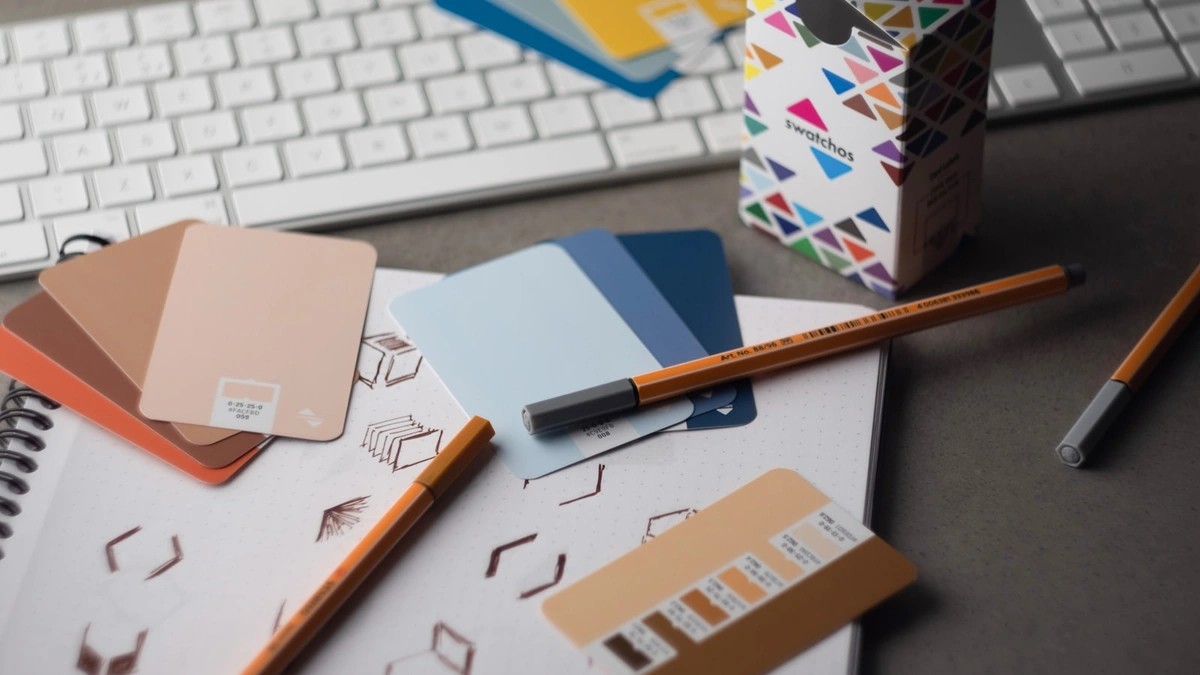
Your brand colors defined with exact values for every use case: HEX codes for web, RGB for digital, CMYK for print, and Pantone for professional printing. A solid palette usually includes two or three primary colors, a couple of secondary colors, and neutral tones for backgrounds and text.
Typography system
The specific fonts your brand uses for headings, body text, and accents, along with licensing information (which matters if you’re using premium fonts), size hierarchies, and pairing guidelines so everything looks intentional.
Brand guidelines document
This is the playbook. A brand guidelines document (sometimes called a brand style guide or brand book) tells anyone on your team, any freelancer you hire, or any future agency exactly how to use your brand assets correctly. It covers logo usage rules, spacing requirements, color applications, typography rules, tone of voice, and examples of correct vs. incorrect usage.
If an agency doesn’t deliver a brand guidelines document, that’s a major red flag. More on that below.
Brand collateral
Depending on the package, this can include business cards, letterhead, social media templates, email signatures, presentation templates, signage mockups, and packaging design. Not every business needs all of these, but a good agency will help you prioritize based on where your customers actually interact with your brand.
A logo is not a brand identity
This is worth emphasizing because it’s the most common mistake business owners make when shopping for brand identity design services.
Getting a logo designed for $300 on a freelance marketplace might give you a decent mark, but it won’t give you a system. You’ll end up picking random colors for your website, using whatever font looks good in the moment, and your marketing materials will look like they came from five different companies.
A full brand identity creates consistency, and consistency builds trust. When your website, social media, business cards, proposals, and packaging all feel like they belong together, customers perceive you as established and professional. That perception directly affects whether they choose you over a competitor.
Think of it this way: a logo is a noun, and a brand identity is a language.
What the process looks like, from discovery to delivery
If you’ve never gone through a brand identity project, the process can feel opaque. Here’s what to expect from a well-run engagement:
Phase 1: Discovery and strategy
This is where the agency gets to know your business. Expect in-depth conversations about your target audience, competitors, values, personality, and goals. Good agencies will also research your industry and analyze competitor positioning before they start designing anything.
This phase usually takes one to two weeks and might include surveys, brand audits, competitor analyses, and stakeholder interviews.
If an agency skips discovery and jumps straight to “pick a style you like,” they’re designing decoration, not strategy. Your brand identity should be built on a foundation of who you serve and how you want to be perceived.
Phase 2: Concept development
Based on the discovery phase, the design team develops two or three initial concepts, typically presented as mood boards or concept directions before any final design work begins. You’ll see preliminary logo explorations, color directions, and typographic options.
This is your chance to give feedback and steer the direction. A good agency will explain the reasoning behind each concept, not just ask “which one do you like better?”
Phase 3: Design refinement
Once you’ve chosen a direction, the agency refines the selected concept into a polished system. This is where your logo gets finalized, your color palette gets locked in, typography gets selected, and all the pieces start coming together into a cohesive identity.
Expect two or three rounds of revisions during this phase. More than that usually signals a misalignment that should have been caught in discovery.
Phase 4: Brand guidelines and collateral
With the core identity finalized, the agency builds out your brand guidelines document and any collateral included in your package. This is where everything gets documented so your brand can be applied consistently going forward.
Phase 5: File handoff
At the end of the project, you should receive all source files, all final files, and full ownership of everything. We’ll come back to this because it’s one of the biggest areas where agencies drop the ball.
How to evaluate brand identity agencies
Not all brand identity design services deliver the same quality. Here’s how to sort the good from the mediocre:
Look at their portfolio (deeply)
Don’t just glance at pretty logos. Look for full case studies that show the before and after. Did they create a cohesive system or just a logo? Can you see brand guidelines in action? Does their work show range across different industries, or do all their projects look the same?
For example, when we built the brand identity for Nom House, a restaurant concept, the project went far beyond logo design. It included a full brand system built from scratch: logo suite, color palette, typography, brand guidelines, menu design, signage, and social media templates. That’s the depth you should be looking for.
Understand their process
Ask about their process before you ask about price. An agency with a clear, structured process (discovery, concept, refinement, delivery) is far more likely to deliver a strong result than one that says “just send us your ideas and we’ll make something.”
Good questions to ask:
- How do you approach the discovery phase?
- How many concept directions do you present?
- How many revision rounds are included?
- What does the final deliverable package look like?
- What file formats will I receive?
Clarify ownership of deliverables
You need to own your brand files. Not lease them, not license them, but own them outright.
Some agencies retain ownership of the design files and only give you limited-use licenses. Others use proprietary tools or platforms that make it impossible to take your brand assets and work with a different partner later. This is a form of vendor lock-in, and it’s designed to keep you dependent on them.
Ask directly: “Will I own all source files and final files at the end of this project?” If the answer is anything other than an unqualified yes, walk away.
Check for post-delivery support
A good agency doesn’t disappear after the handoff, so ask about post-delivery support. Will they help you implement the brand across your website and marketing channels? Is there a window for questions after delivery? Do they offer ongoing brand management?
Red flags to watch for
Here are the warning signs that a brand identity provider isn’t going to deliver real value:
No brand guidelines document
If the deliverables list doesn’t include a brand guidelines document, you’re getting a logo, not a brand identity. Without guidelines, every designer who touches your brand in the future will interpret it differently, and your brand will drift, lose consistency, and eventually look like a patchwork.
No source file handoff
If they won’t give you editable source files (AI, EPS, or SVG for logos, and InDesign or Figma files for templates), you don’t truly own your brand. You’re renting it, and the moment you stop working with that agency, you’re stuck.
Proprietary platform lock-in
Some agencies build your brand assets inside proprietary tools that only they can access. Your logo lives in their system, your templates live in their platform, and your brand guidelines are behind their login. If you leave, you lose access to your own brand.
This is unacceptable. Your brand identity should live in standard, widely-supported file formats that any designer can open and work with. We’ve written about how to avoid vendor lock-in in depth, and the same principles apply here.
Unrealistically low pricing
A full brand identity designed by experienced professionals takes real time. If someone is offering a “complete brand identity” for $500, you’re either getting a template slightly modified for your business name or a logo with some color swatches thrown in, and neither of those is a real brand identity.
That doesn’t mean you need to spend $50,000 either, but quality brand identity design services from a capable team typically start in the low-to-mid four figures and go up from there depending on scope.
No discovery phase
If an agency asks you to fill out a brief and starts designing immediately, they’re skipping the most important part of the process. Discovery is where strategy happens, and without it you’re getting design that looks nice but isn’t grounded in anything meaningful about your business or your audience.
The ownership angle
Something most brand identity posts won’t tell you: the biggest risk isn’t bad design. It’s losing control of your own brand.
When you invest in brand identity design services, you’re investing in one of your most valuable business assets. Your brand is how customers recognize you, trust you, and choose you over competitors, and if you don’t own your brand files outright, you’re building on rented ground. This is similar to the single source of truth concept: your brand assets should live somewhere you control.
This is a core philosophy at lilAgents. Every brand identity project we deliver comes with complete file handoff and full ownership. When the project wraps, you walk away with everything: every source file, every export, every template, and the brand guidelines. It’s yours, permanently.
If you want to take those files to a different agency next year, you can. If you want your in-house designer to handle things instead, they can modify any template. If you want to hand everything to a printer for a trade show booth, they’ll have exactly what they need.
That’s what real brand identity design services should look like. You’re paying for expertise, not dependency.
You can see this approach in action in our Nom House case study, where we built a complete restaurant brand identity from the ground up and handed over every single file at the end of the project.
Brand systems and brand code delivered as real source files. See how we ship brand work.
See design servicesHow to know you’re ready to invest
Not every business needs professional brand identity design services right now, but here are some clear signals that you’re ready:
- Your current brand was DIY’d and it shows. Customers or partners have commented on it.
- You’re about to launch a new business, product line, or location and you need to look professional from day one.
- You’re rebranding because your business has evolved and your visual identity hasn’t kept up.
- You’re scaling and your inconsistent brand is becoming a liability, with proposals, presentations, and marketing materials all looking different.
- You’re losing deals to competitors who simply look more polished and trustworthy.
If any of those hit home, it’s worth having a conversation. If you’re not sure whether you need an agency or can handle it in-house, start there.
Frequently asked questions
How much do brand identity design services cost?
Pricing varies widely based on scope, agency experience, and deliverables included. For a comprehensive brand identity (logo suite, color palette, typography, brand guidelines, and basic collateral), expect to invest anywhere from $3,000 to $15,000 with a mid-tier agency. Enterprise-level projects with extensive research, multiple stakeholder groups, and large collateral packages can run $20,000 and above. The key is understanding exactly what’s included before comparing quotes. If you want a broader sense of how much a digital marketing agency costs, that guide covers pricing across services.
How long does a brand identity project take?
A typical brand identity project takes four to eight weeks from discovery to final delivery. Simpler projects (new business, clean slate, decisive founder) can move faster, while more complex projects with multiple stakeholders, extensive collateral needs, or regulatory considerations may take ten to twelve weeks. Be wary of anyone promising a full brand identity in under two weeks, because that’s not enough time for proper discovery and strategic design.
What’s the difference between brand identity and brand strategy?
Brand strategy defines who you are, covering your positioning, messaging, target audience, competitive differentiation, and value proposition. Brand identity is the visual expression of that strategy: your logo, colors, typography, and design system. Ideally, strategy comes first and identity follows. Some agencies offer both as a combined package, while others specialize in one or the other. The strongest brand identity work is grounded in strategy, even if the strategy work is a lighter-touch phase within the identity project.
Can I update my brand identity later, or am I locked in?
If you’ve chosen the right agency and received full ownership of your brand files, updating your identity later is straightforward. You or any designer can modify the source files, evolve the color palette, refresh the logo, or expand the system, and that’s exactly why file ownership matters so much. If your current agency holds your files hostage, updating becomes expensive and complicated. Always make sure you walk away with everything.
Should I hire an agency or do brand identity in-house?
It depends on your team’s design capabilities and how much time you can dedicate to the project. If you have an experienced designer on staff who understands brand systems (not just making things look nice), in-house can work. But most small businesses don’t have that kind of specialized talent available, which is why an agency with a proven process usually delivers better results in less time. We wrote a full comparison of in-house marketing vs. agency work if you want to think through the tradeoffs.
What should I look for in an agency’s checklist before signing?
Beyond the red flags covered above, you want to make sure the agency’s contract spells out deliverables, timelines, revision limits, file ownership, and what happens if the project scope changes. A good checklist for evaluating agencies can help you ask the right questions before you commit to anything.