8 Digital Marketing Trends That Define 2026
Your customers aren’t finding you the way they used to in digital marketing trends 2026.
26% of searches now end without a click. Instagram sees over 6.5 billion searches every day. ChatGPT is rolling out ads that target based on your entire search history, not just what you typed five seconds ago.
If your marketing playbook still looks like 2024, you’re already behind for digital marketing trends in 2026.
We’ve been tracking these shifts across our client work, and Neil Patel recently broke down his predictions for digital marketing trends 2026 that line up with a lot of what we’re seeing. Here are eight trends that will reshape how brands get found in 2026, plus what you can actually do about each one.
1. Stop Chasing Clicks Off Platform
Here’s a pattern we see constantly: brands pour money into social content, then immediately try to push everyone to a landing page.
The platforms hate this. Instagram, LinkedIn, and Facebook actively throttle your reach the moment you try to move people elsewhere. Your engagement drops, your ad costs climb, and most people bounce anyway because the landing page loads slow on mobile.
Try this instead: Keep the lead capture inside the platform. Tools like ManyChat let you trigger automated DM conversations when someone comments with a keyword. They give you their info without ever leaving the app. Consider using a link-in-bio service to consolidate your presence when you do need to direct traffic.
We’ve seen this cut cost-per-lead significantly for clients while boosting engagement signals. The algorithm rewards you because you’re keeping people where the platform wants them in digital marketing trends 2026.
2. Search Now Happens Everywhere
Google still matters. But it’s not the only place people search anymore.
Instagram handles 6.5 billion searches per day. YouTube processes over 3 billion. TikTok has become a product search engine for younger buyers. ChatGPT is emerging as a discovery tool. Even Snap just signed a $400 million deal with Perplexity to power their search.
Your customers are jumping across platforms like stepping stones. Most brands only show up on one.
This is what Neil Patel calls “Search Everywhere Optimization.” The idea is simple: format your content to rank across all major discovery surfaces, not just traditional search engines, to stay relevant in digital marketing trends 2026. We recently helped a law firm rank #1 without writing new posts by optimizing their existing content for modern search.
How to do it:
- Weave keywords into everything. Your script, captions, on-screen text, description. That’s how platforms understand your topic.
- Build topic clusters. Multiple posts around the same theme signal authority.
- Optimize for conversational search. People search in full phrases now. The algorithms read audio, captions, transcripts, and visual text to match intent.
When your content aligns with how people actually search, you show up everywhere they look in 2026.
3. AI Slop Is Real and It’s Costing Teams
AI was supposed to make marketing faster. For a lot of teams, it’s doing the opposite.
We ran internal tests comparing free and paid AI tools. Hallucination rates were almost identical. The problem isn’t the tools themselves. It’s that people trust outputs that sound confident but are completely wrong.
Fake stats. Misquoted sources. Conclusions that don’t match the evidence. This “AI slop” is eating up hours of rework and killing campaigns.
Here’s something else worth mentioning: a lot of companies are blaming AI for layoffs when the real story is they overhired. “Simplifying with AI” sounds better to shareholders than admitting a staffing mistake. Meanwhile, the actual inefficiency often comes from bad AI outputs that waste time.
What works better:
- Use AI for first drafts, not final drafts
- Cross-reference any stats or claims (check sources, verify dates)
- Build internal quality checks
- Let AI help you brainstorm, but don’t hand over strategic decisions
AI doesn’t replace your judgment. It multiplies it. The biggest ROI isn’t from the tools. It’s from positioning your brand where AI platforms send traffic in digital marketing trends 2026.
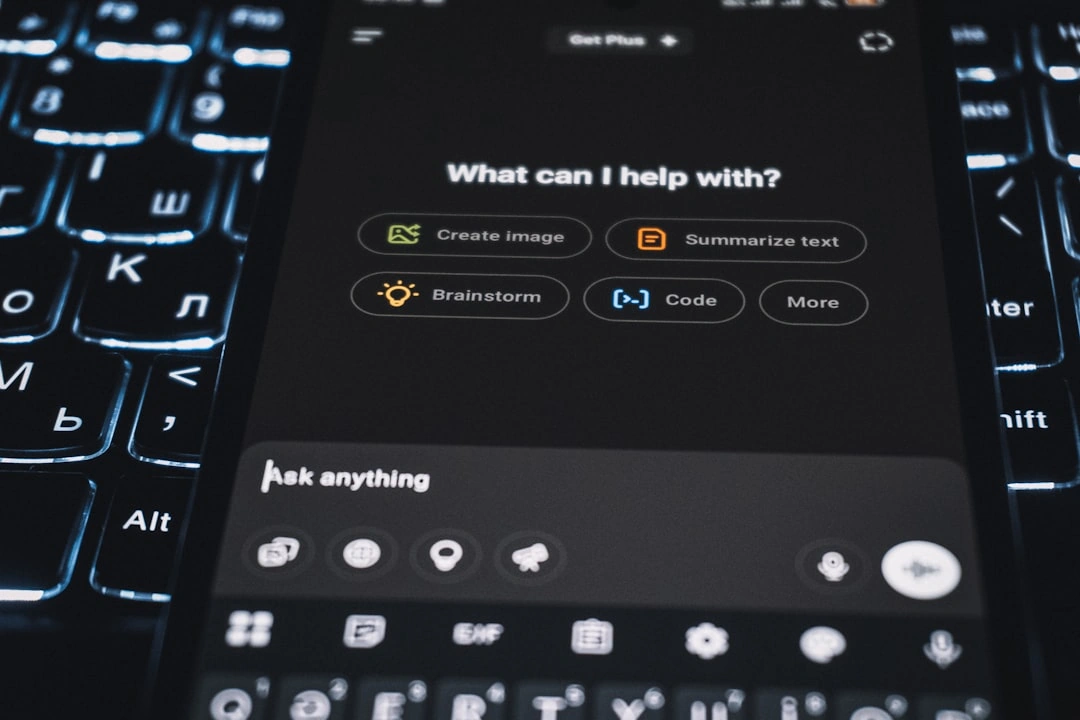
4. AI Tools Are Becoming Discovery Engines
This is a shift that’s flying under the radar for most marketers.
AI tools aren’t just answering questions anymore. They’re turning into full discovery engines. And like Google, they’re starting to prioritize sources they trust. The OpenAI and Shopify partnership is a prime example of this trend in action.
We’ve noticed clear patterns in what gets cited:
- Listicles (especially “top 10” posts)
- Structured pages with clear formatting
- Content with consistent headers and bullet points
If you publish top 10 lists across multiple specific categories, you start training ChatGPT to see you as an authority in digital marketing trends 2026. See our guides on the best free QR code generators and top link-in-bio services as examples of this format.
How to execute this:
Don’t just write “top 10 marketing agencies.” Write the subcategories:
- Top 10 SaaS agencies
- Top 10 e-commerce agencies
- Top 10 affordable marketing agencies
- Top 10 agencies for franchises
The more micro-categories you own, the more often you get cited.
Publishing “we’re the best” on your own site won’t cut it. AI systems will eventually build authority algorithms to filter out self-promotion. You need other trusted sources in your industry citing you. That’s where digital PR comes in.
Content that gets cited:
- Clear headers and bullet points
- Tables that are easy to scan
- Last updated dates (AI favors fresh information)
- Schema markup
- Case studies with real data
When multiple sites rank you as a top source, AI platforms take notice. This is the new SEO, and almost nobody is doing it well yet in 2026.
5. AI Ads Will Combine Facebook’s Targeting With Google’s Intent
When ChatGPT launches ads, they won’t work like Google search ads.
Think about it: ChatGPT knows your entire search history. Your patterns. Your problems. What you keep coming back to.
If you search for marketing agencies, you might see a marketing agency ad. But if nine of your last ten searches were about losing weight, you might see a weight loss ad instead. That’s what’s actually on your mind.
This is identity-based targeting with search-level accuracy. Look at who OpenAI is hiring: former Facebook and Instagram ad engineers who specialize in predictive modeling and behavior-based targeting.
- Google shows you ads based on what you type
- Facebook shows you ads based on who you are
- ChatGPT will do both
How to position yourself now:
- Build topical authority. Consistently publish content addressing specific problems for specific audiences.
- Use first-party data. Connect your CRM, purchase history, and customer interactions to your ad platforms.
- Get specific about who you help. Don’t say “we’re a marketing agency.” Say “we help SaaS companies scale from $1M to $10M through performance marketing.”
The specificity trains AI to understand exactly who you are and who you serve in digital marketing trends 2026.
6. Browsers Are Becoming the Platform
This one isn’t getting enough attention.
AI is moving into the browser layer. Chrome’s Gemini. ChatGPT’s Atlas. Perplexity’s Comet. Right now we visit different websites for different things. That’s changing.
Imagine this: your customer opens a browser tab and asks it to compare tools. The browser summarizes everything, makes recommendations, and shows AI-driven ads. They never visit a website.
That’s the future of discovery. Browsers become the platform. AI inside the browser pulls information directly from your site and presents it to users instantly.
What this means for you:
Your content needs to be structured so AI can extract and display it without users ever clicking through. That means:
- Clear, scannable formatting
- Direct answers to common questions
- Schema markup that makes your content machine-readable
- Consistent information across all your properties
The days of relying purely on website visits are numbered in 2026.
7. First-Party Data Becomes Your Lifeline
Third-party cookies are disappearing. AI platforms are building their own targeting systems. The brands winning in digital marketing trends 2026 are the ones that own their customer relationships directly. This is why understanding how to calculate your marketing ROI is more important than ever.
This means:
- Email lists with engaged subscribers
- CRM data tracking the full customer journey
- Purchase history revealing buying patterns
- Direct customer feedback
When you integrate this data into your marketing platforms, you’re teaching AI to find more people like your best customers. Without it, you’re relying on platforms that know less and less about who you’re trying to reach.
Quick wins:
- Build lead capture into every piece of content
- Create value exchanges that make people want to share information
- Keep your CRM clean and connected to ad platforms
- Use purchase data to build lookalike audiences
8. Quality Is the Only Moat Left
AI has made content creation faster and cheaper for everyone. Your competitors can now publish at volumes that would’ve been impossible five years ago.
That means generic content gets buried. What stands out:
- Unique perspectives from real experience
- Data and insights nobody else has
- Specific advice, not vague platitudes
- Content that actually answers the question asked
Human-created content still outperforms pure AI-generated content. The gap widens over time. AI can help with research and drafting, but original thinking is what separates content that gets cited from content that gets ignored. For a deep dive on using AI effectively in development, see our article on vibe coding best practices.
The winners in digital marketing trends 2026 won’t be the ones publishing the most. They’ll be the ones publishing what can’t be easily replicated.
Where This Leaves You
These trends share a thread: platforms and algorithms are getting smarter, and they reward authenticity, specificity, and genuine expertise.
The marketers who understand these shifts aren’t worried about AI or algorithm changes. They’re using these tools to extend their reach, build authority, and show up everywhere their customers look in 2026.
Stop reacting to changes after they happen. Start leading. Explore our services or view our case studies to see how we help businesses stay ahead of these trends.
Want help implementing these trends before your competition catches on? We'll audit your current visibility and build a strategy that positions you across every platform that matters.
Get a Free Marketing AuditFAQ: 2026 Marketing Trends
What is Search Everywhere Optimization?
It means creating content formatted to rank across all major discovery surfaces, not just Google. This includes Instagram, YouTube, TikTok, ChatGPT, and other platforms where people now search for information and products in digital marketing trends 2026.
How do I get cited by ChatGPT?
Create structured content like listicles and comparison posts in specific niches. Use digital PR to get other trusted sources to cite you. Format with clear headers, bullet points, and schema markup so AI can easily extract and reference your content.
Will AI replace marketing jobs?
AI is changing marketing roles, not eliminating them. The biggest inefficiency comes from teams using AI without validation. Marketers who use AI for drafts while maintaining human oversight will thrive in 2026.
How should I prepare for ChatGPT ads?
Build topical authority by consistently publishing on specific topics. Integrate first-party data into your platforms. Create content that clearly communicates who you help and how.
Why do platforms penalize external links?
Platforms like Instagram, LinkedIn, and Facebook want users inside their ecosystem. When your content tries to move people off-platform, the algorithm reduces your reach. Keeping lead capture inside the platform avoids this penalty in digital marketing trends 2026.
What content format works best for AI discovery?
Listicles with specific categories, structured pages with clear headers, content with last updated dates, and pages with schema markup. AI engines favor content that’s easy to parse and cite.
How important is first-party data in 2026?
Essential. With third-party cookies disappearing and AI platforms building their own targeting, brands that own their customer relationships directly have a significant competitive advantage in digital marketing trends 2026.
Should I still invest in traditional SEO?
Yes, but it’s not enough alone. Traditional SEO fundamentals still matter, but expand into Search Everywhere Optimization and AI discovery. Digital PR is becoming as important as traditional link building.